INDIGENOUS PEOPLES OF THE AMERICAS
Created by: Sarah McCracken
For Grades: K-2
Table of Contents
- Introduction
- Memorial of the Cherokees, Text
- Los Huecos del Agua, Image
- Incised Jade Ear Flare, Images
- A Quote From Dr. Yolanda Leyva Borderland Historian, Quote & Image
- El Árbol de la Vida- The Tree Of Life By Veronica Castillo, Interactive Model
- A Zo’é family relaxes in a hammock made from Brazil nut fibers, Image
- Teaching Resources
Introduction
Indigenous Peoples of the Americas focuses on the first people or, people native to North, Central, and South America. I define Indigenous people as people native to these specific areas i.e. the Americas, the Caribbean, etc., who were subject to the consequences of colonial powers. I chose this topic because I feel like there isn’t enough representation of the complexities of indigenous identities as a result of colonialism. Additionally, there is this continued belief that Indigenous people are of the past. It needs to be broken. They are still dealing with the long lasting effects of oppression and awareness needs to be spread. I wanted to raise more awareness by presenting indigenous groups that people may not perceive as indigenous or that have little representation. In my collection of primary sources, I am able to emphasize the narrative that Indigenous people are a vital community that lives and persists in the present. I provide sources not only from the past, but also of real people and real mediums of the present. I also provide questions to guide k-2 thinkers in developing new perceptions of what it means to be an indigenous person and the consequences, or social injustices, that may come with that. My collection also includes interactive parts that encourage students to explore these ideas and concepts on their own and in small groups. It will also inspire whole group conversation and also potentially lead to further research projects or activities based on different indigenous groups.
1. Memorial of the Cherokees, 10/1829
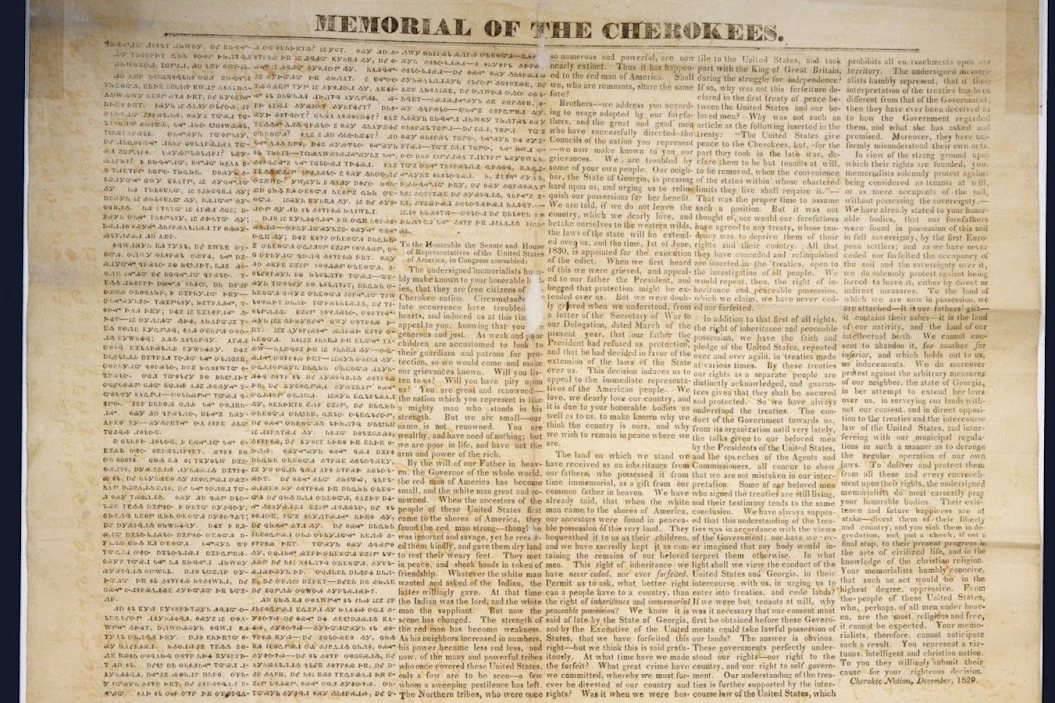
Records of Rights. Memorial of the Cherokee, 1829. (n.d.). http://recordsofrights.org/records/39/memorial-of-the-cherokee
During this time, President Andrew Jackson of the United States had the Cherokee Nation (people indigenous to what we now call Georgia, Alabama, and Tennessee) forcibly removed from their homelands to areas West of the Mississippi River. This document was written by the Cherokee Nation to the US in hopes of being able to keep their land from being stolen from them as well as having to suffer more by being forcibly removed from what was rightfully theirs.
To zoom in and read the document, CLICK HERE.
Questions
- What do you think the Cherokee Nation meant when they said, “Will you listen to us? Will you pity us?”
- They mention the word “Consent” in their response to their land trying to be taken away. What role do you think consent played in the U.S. taking the land of the Cherokee?
- Why do you think the United States felt as though they had the “right” to take this land away without the Cherokee Nation’s consent?
2. Los Huecos del Agua, 2021
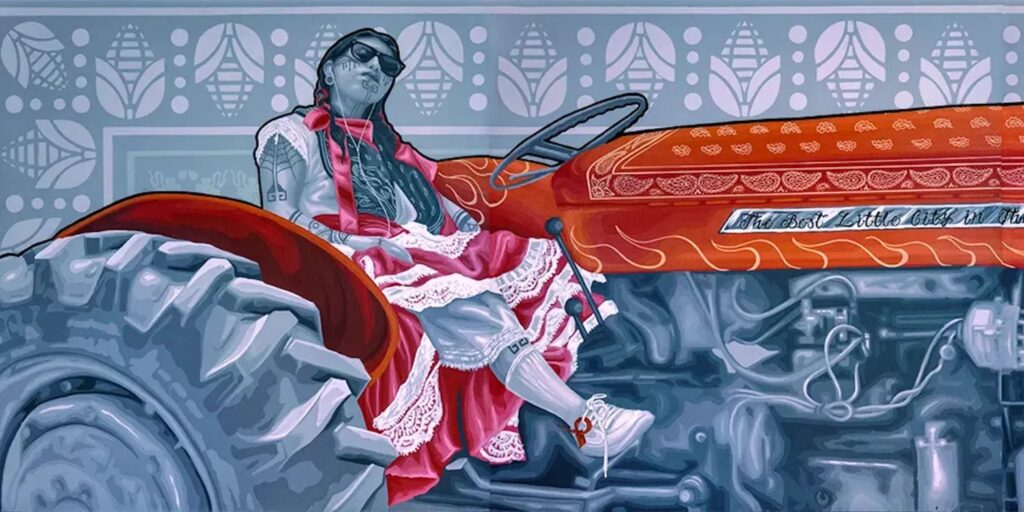
Search. National Museum of Mexican Art, Pilsen, Chicago. (n.d.). https://nationalmuseumofmexicanart.org/events/los-huecos-del-agua
Los huecos del agua, Recent Indigenous Art from Mexico Features artists whose work focuses on the recreation of the present moment and the legacy left behind by Native cultures before Spanish colonizers arrived to present-day Mexico.Criticism emerges towards forced incorporation of culture, the environmental downfall due to the nation’s concessions of land (contract to control land), not letting them self govern, and the racist (treating people based on ethnic group or race) violence against native people.
Questions
- What about the photo stands out to you? What do you think it has to do with the previously mentioned issues?
- The description of this art piece mentions “concessions of land.”How might Cherokee People feel looking at this photo?
- What role may the colors of the art work say about the emotions of Mexican people? Or other Indigenous People that we are talking about?(Cherokee, Mayans, Zo’é, others you know?)
3. Incised Jade Ear Flare, CE 100-200
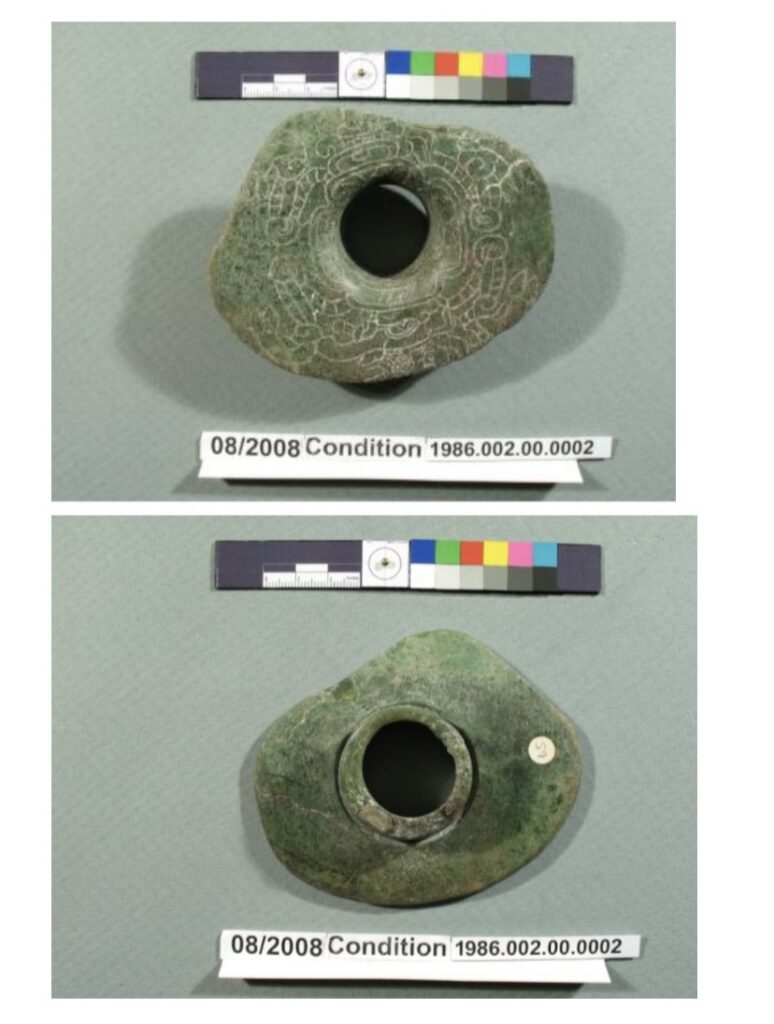
Incised jade ear flare, CE 100-200. The Library of Congress. (n.d.). https://www.loc.gov/item/gmdkislak1986_002_00_0002/
Ear Flares are big earrings that are placed inside of the earlobe. Jade was a natural resource to those in Guatemala, specifically the Mayans. Jade signified wealth and power among the elites within the civilization. Sometimes the symbols represented on the jade were of gods worshiped by these ancient civilizations.
Questions
- What does this say about the resources some Indigenous people had access to? Is this why some people wanted their land?
- Do you think the other groups of Indigenous people we have looked at had jade? What other resources did they have?
- Wearing ear flares is different from what we see today. What are some things that you do or wear that are tied to your culture from hundreds of years ago?
4. A Quote From Dr. Yolanda Leyva Borderland Historian, 2021
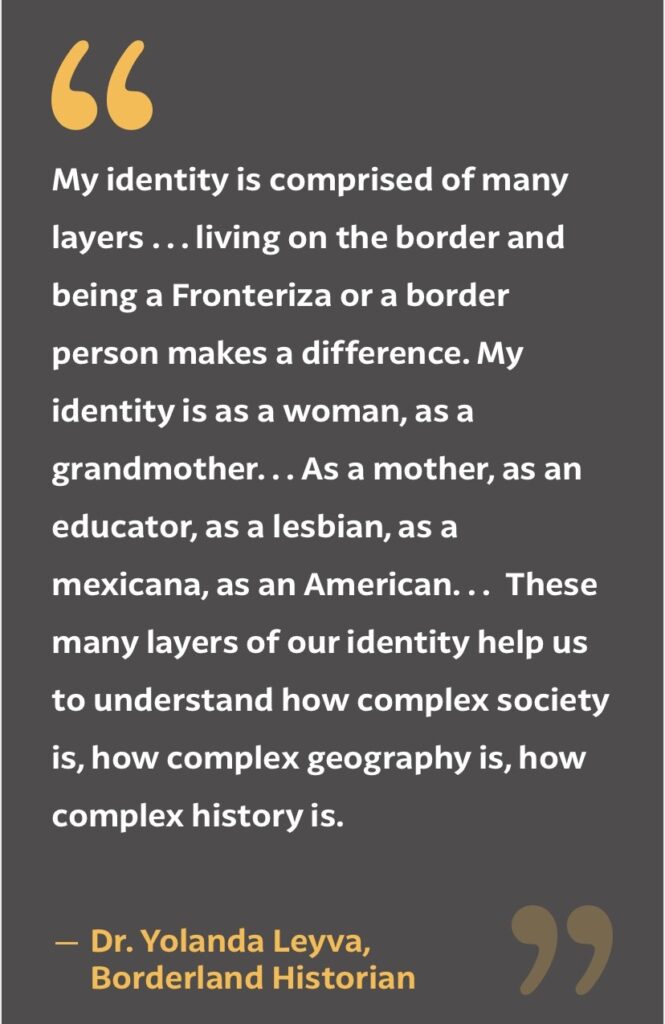
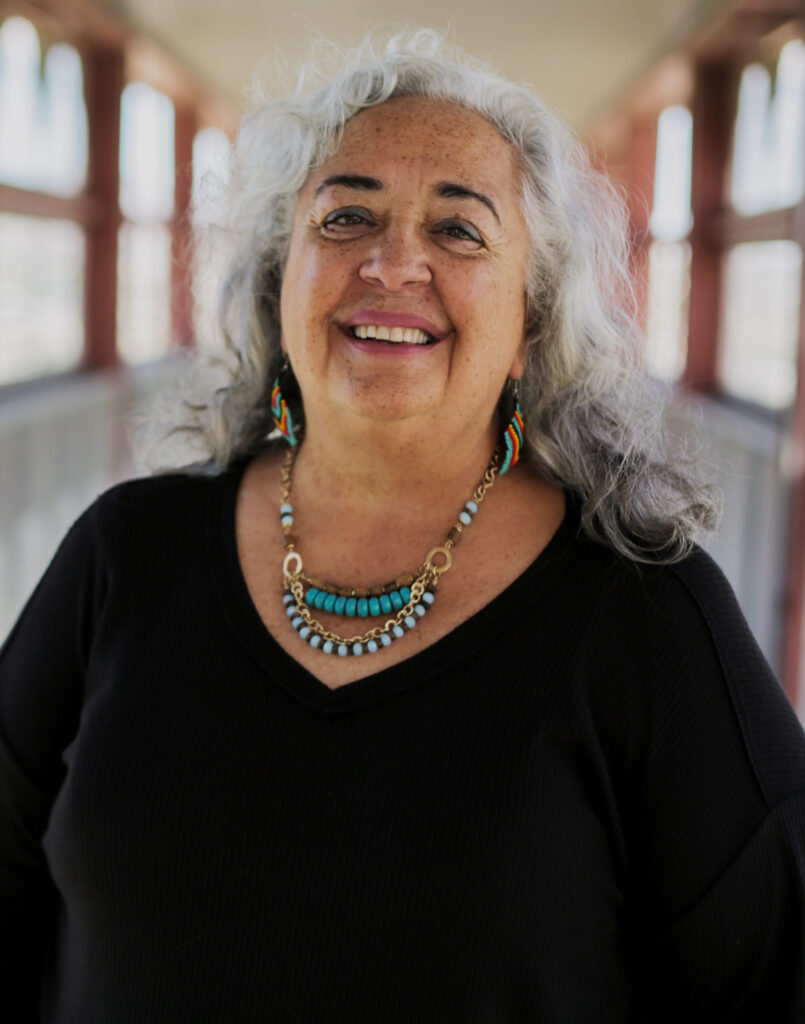
Leyva, Dr. Y. (n.d.). Latino identity. National Museum of the American Latino. https://latino.si.edu/exhibitions/presente/latino-identity
The quote discusses issues with identity being a Mexican-American, or just being indigenous overall. The history of any indigenous group in the Americas is a complex one. Colonial powers attempted and sometimes still try to impose themselves in other peoples’ territory, as a result identities were mixed.
Questions
- Sometimes indigenous people find it difficult to share their narrative. Consider what we have learned so far. Why do you think it may be difficult for them?
- Dr. Leyva mentions the complexity, or the difficulties, of geography. What may this mean?
- What role does people traveling have in creating complexities with indigenous people’s identity?
5. El Árbol de la Vida- The Tree Of Life By Veronica Castillo, June 2022
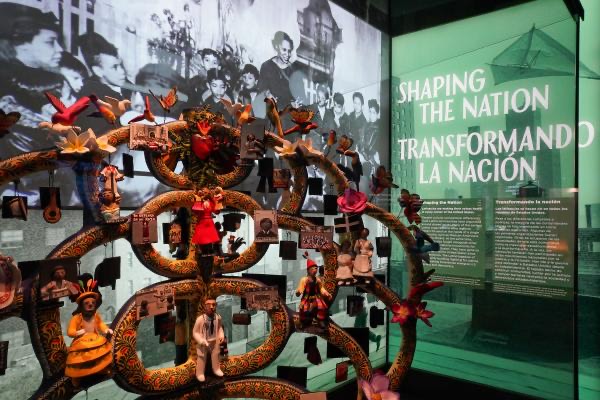
Raíces, historia y Justicia Latinas (Latino roots, history, and Justice). National Museum of the American Latino. (n.d.). https://latino.si.edu/exhibitions/presente/shaping-nation/raices-historia-y-justicia-latinas-latino-roots-history-and
Castillo created this for the National Museum of the American Latino’s debut exhibition, ¡Presente! A Latino History of the United States.Before the Spanish colonization of Mexico, people exchanged Trees of Life and their branches to mark bonds between families or cultures. After Spanish colonizers settled in the Americas and forced Catholicism, these sculptures took on a more religious tone representing holidays like Christmas and Day of the Dead. Each branch shares a theme: The first branch’s theme is “Identity and Community.” This branch addresses how Latinos of diverse walks of life express themselves and support their communities. “Fighting for Justice” is the second branch’s theme: It explores trailblazing Latino activists who dedicated their lives and careers to social and political change. The final branch’s theme is “Breaking Boundaries.” This branch’s examines how Latino leaders have broken up barriers and made space for other oppressed people in the arts, politics, sports, and the military.
Questions
- Let ‘s explore El Árbol de la Vida, CLICK HERE. What do you notice about it? What injustices can you notice?
- What do you notice about the people in the tree? Why do you think they were placed where they were?
- How do the three branch theme’s relate to other indigenous groups that have been mentioned?
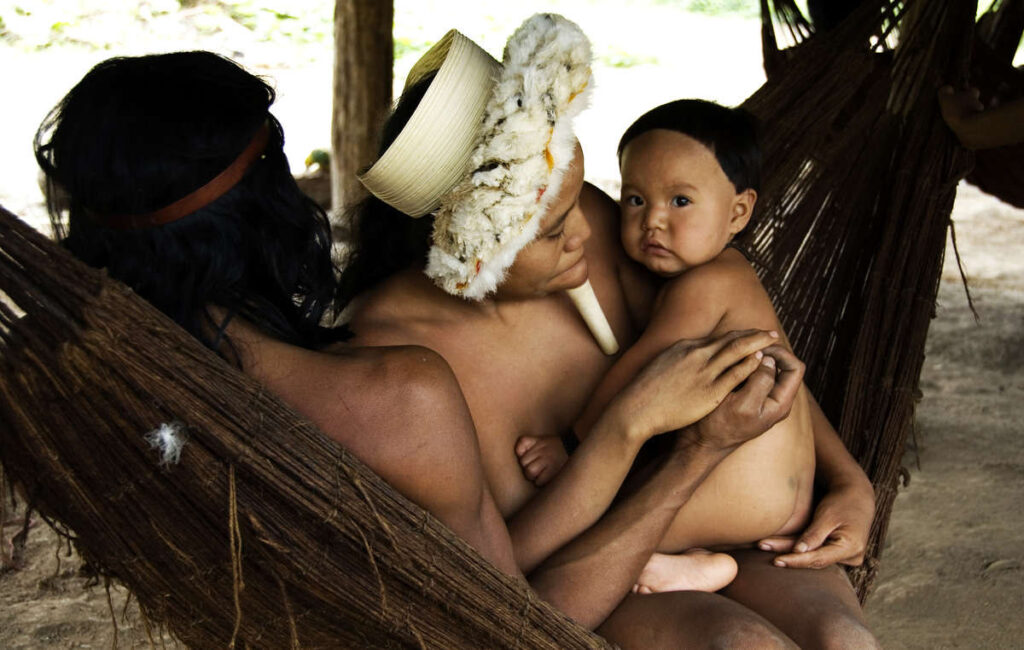
6. A Zo’é family relaxes in a hammock made from Brazil nut fibers (Fiona Watson/Survival)
International, S. (n.d.). Brazilian Indians. Survival International. https://www.survivalinternational.org/tribes/brazilian
The picture above shows individuals of the Zo’é tribe relaxing in a hammock that is made entirely of nut fibers. Most Zo’é people live entirely off the forests, savannas and rivers by a mixture of hunting, gathering and fishing. They grow plants for food and medicine and use them to build houses and make everyday objects. They rely on nature and the resources that it provides to survive. Some people are trying to destroy natural resources and nature (deforestation). Some people don’t realize that the indigenous people play an important role in protecting the nature and wildlife there (biodiversity).
Questions
- Have you ever used a hammock before? What was yours made of?
- What do you notice about the families clothing? How is it different from what you wear?
- How can we learn from the Zo’é Tribe or other indigenous groups we have looke at? Can we learn about nature? Society? Politics? Survival?
Teaching Resources
Learn More!
- Trail Of Tears National Historic Trail, https://www.nps.gov/trte/index.htm
- National Museum of Mexican Art, https://nationalmuseumofmexicanart.org/history
- National Museum of The American Latino, https://latino.si.edu/exhibitions/presente/shaping-nation/raices-historia-y-justicia-latinas-latino-roots-history-and
- Native Brazilians, https://www.survivalinternational.org/tribes/brazilian

