Content warning(s): mass death, hate crime (racial), discussion of harmful weapons
Created by: Imari Jordan
For Grades: 5th and beyond
Table of Contents
- Introductory Narrative
- Tulsa Massacre Incident Report – Maurice Willows
- Homes of a Ruined Neighborhood (Post-Massacre)
- Tulsa Tribune Newspaper Article (Post-Massacre)
- Labeled Postcard of Mid-Massacre Destruction
- Viola Fletcher Speaking Amongst a Congressional Hearing
- Greenwood before the race massacre and Greenwood rebuilt after the massacre
- Relevant Literature
Introductory Narrative
In June of 1921, the Greenwood District in Tulsa, Oklahoma, also known as Black Wall Street, was looted and burned by white Tulsans due to racial hatred and violence. This horrific event stemmed from a court decision that sent Tulsans rioting in the streets, and in the end, the flame of hatred destroyed a community. More than 35 blocks of the Greenwood District were destroyed, including most of all the homes, lives, and important businesses and pillars that kept the Black community members successful in a time where they were unexpected to thrive. Because of this, families were forced to separate and evacuate the state immediately to find comfort and security in other states. The Tulsa Race Massacre caused a lot of sorrow and generational trauma in the Black community, even in states outside of Oklahoma. However, even through all the pain, torture, and loss endured by the people who experienced this, they spent years rebuilding and strengthening their bonds and families.
I am introducing this to my students because it is a well-known event, but it is not an event that receives the acknowledgement that it deserves. The Tulsa Race Massacre left these people with mountains of generational trauma and poverty. It should be recognized as the cruel injustice that it was as well as a prime example of the strength of Black communities through their quick adaptations and rebuilding within 20 years. The social studies curriculum should discuss more about how Black communities built their pillars, what they needed most in their communities, and how those community pillars brought them together. We need just as much discussion about Black prosperity as Black suffering. Before the massacre, the Greenwood District stood very healthily and proud with all of its businesses and community centers. Black Tulsans who lived and worked in this district all had very important relationships with one another, and almost all of their businesses benefited one or the other in some way. Their businesses were places formed through fellowship and joy, so when the district was burned down, it lost a lot more than its physical wealth.
This unit is liberatory because it offers pure, unerased recognition of just how much Black Tulsans suffered. It acknowledges the power of community and exposes the injustices that are continuously practiced both inside and outside of courthouses. Finally, it recognizes the resilience and empowerment of Black people through years and years of violence and doubt.
Tulsa Massacre Incident Report – Maurice Willows

(DocsTeach, Collection ANRC: Records of the American National Red Cross)
This report by Maurice Willows, director of the American National Red Cross, details the horrible events that happened on the days June 30th and May 1st of 1921. When Maurice was alerted of the events, he sent his team at the Red Cross to provide medical aid and assistance to the residents of the Greenwood District. The Red Cross is a center for disaster relief.
Questions
- This powerful report helps us to understand some of the questions that may have been asked during and after the event. What questions do you have about this event?
- Who do you think this report was written for?
- What do you think the importance of writing this report was, for us and for the people who experienced the Tulsa Race Massacre?
Homes of a Ruined Neighborhood (Post-Massacre)
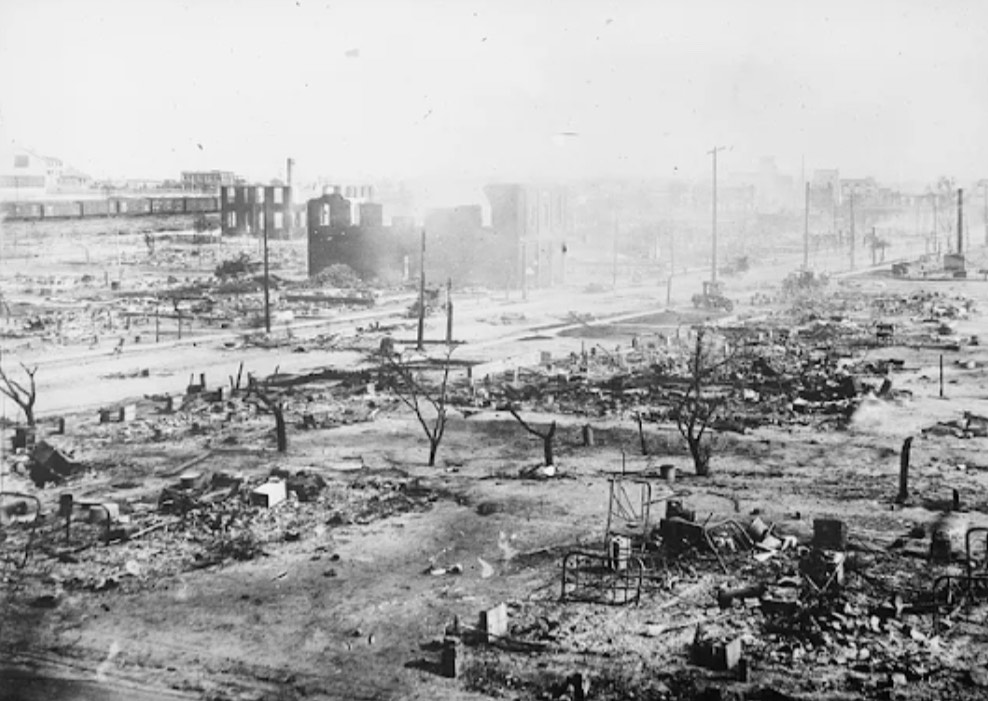
The Oklahoman (Oklahoma Historical Society)
(https://www.okhistory.org/general/searchresults?cx=006940505042147079035%3Att6x59pgkou&cof=FORID%3A11%3BNB%3A1&ie=UTF-8&q=tulsa+race+massacre&sa=Search)
This American National Red Cross photo shows the ruins of homes following the Tulsa race massacre.
Questions
- Where do you think these families went after this destruction?
- How does looking at this photo of an entire neighborhood of homes burned down make you feel? What does it make you think of in today’s modern society? Draw from ideas of housing insecurity, gentrification, etc.
- What kind of resources might these people need while they have no home?
3. Tulsa Tribune Newspaper Article (Post-Massacre)
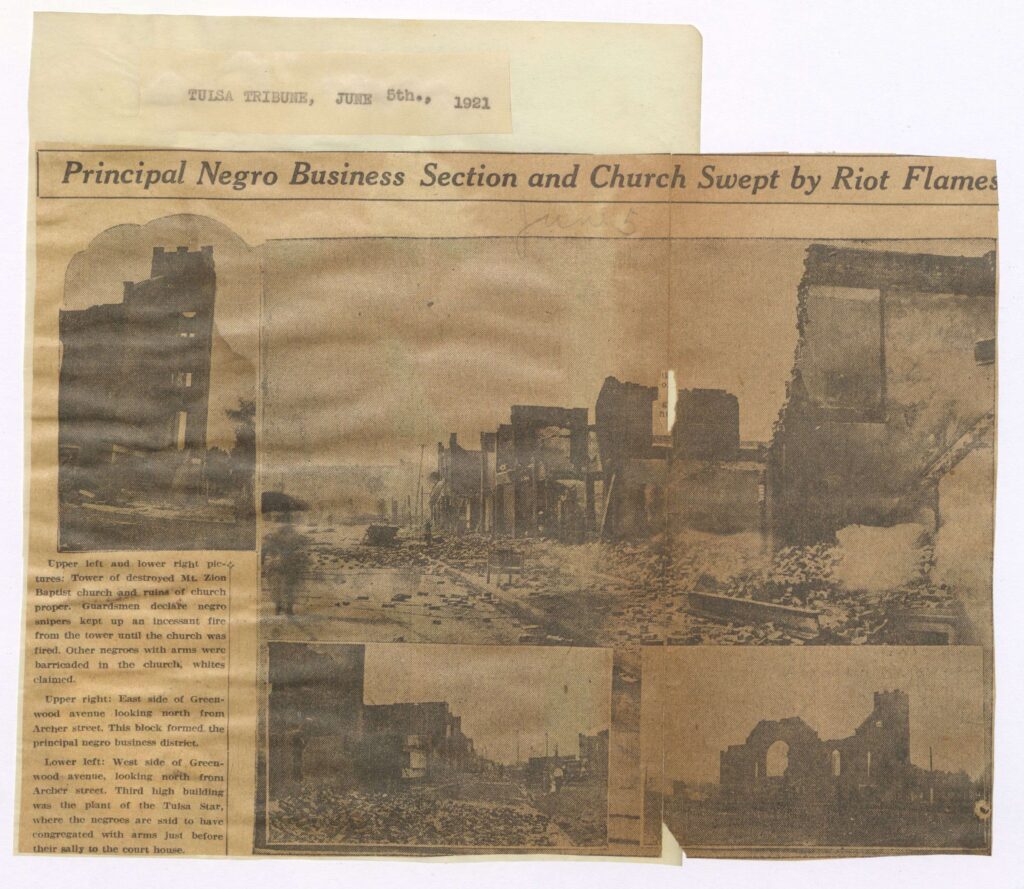
(DocsTeach, Collection ANRC: Records of the American National Red Cross)
This photo shows the ruins of Mt. Zion Baptist Church, Greenwood Avenue, and the former office of the Tulsa Star, a Black newspaper whose office was destroyed.
Questions
- This primary source shows us that the community newspaper center was destroyed — how has this affected their communication throughout the community?
- How is the newspaper helpful to this community? How can newspapers be helpful to all communities?
- Read the first paragraph in the newspaper – it discusses that a group of Black snipers kept up an incessant fire inside of a church. Who do you think this was written by? What context
- clues support your ideas?
4. Labeled Postcard of Mid-Massacre Destruction
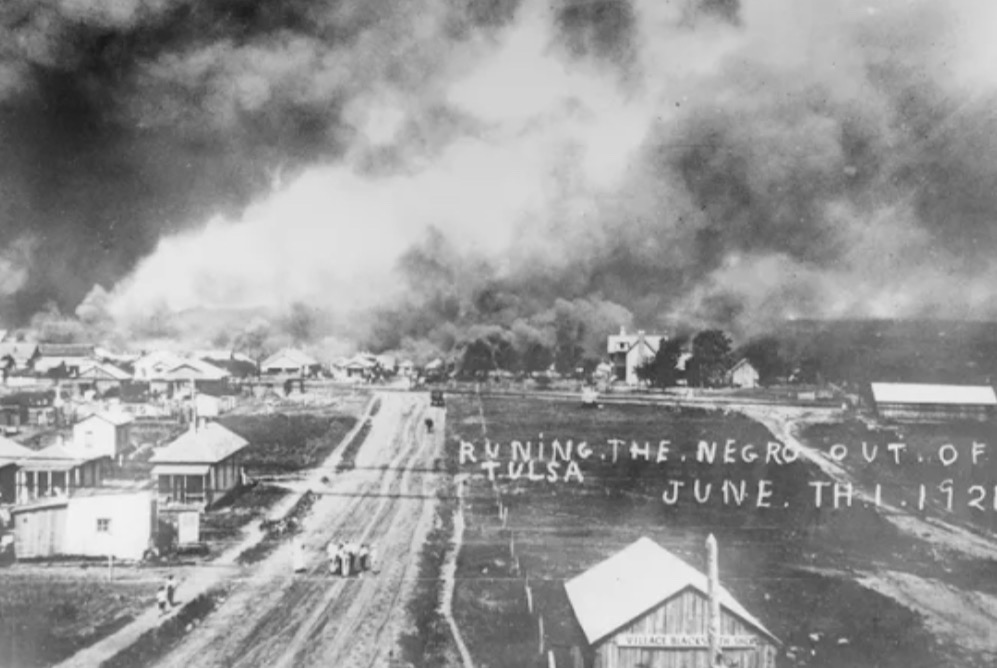
The Oklahoman (Oklahoma Historical Society)
(https://www.okhistory.org/general/searchresults?cx=006940505042147079035%3Att6x59pgkou&cof=FORID%3A11%3BNB%3A1&ie=UTF-8&q=tulsa+race+massacre&sa=Search)
A postcard that reads “Running the negro out of Tulsa June the 1st. 1921” shows the Greenwood district community while it is being burned. After this tragic event, postcards were sent by Greenwood residents throughout the country to extended families and community organizations, like the Red Cross. The postcards sometimes had very graphic backgrounds of the event while some of them had backgrounds of the city and its destruction.
Questions
- What do you see in this picture?
- Where might the people in this photo be going?
- What do you think the goals were behind sending these postcards?
5. Viola Fletcher, the oldest living survivor of the Tulsa Race Massacre, speaking amongst a congressional hearing.
(https://www.npr.org/2021/05/19/998225207/survivors-of-1921-tulsa-race-massacre-share-eyewitness-accounts)
Viola Fletcher speaks to Congress about the trauma that she relives every day as well as her hopes of a future full of peace and justice.
Questions
- In this video, the survivor, Viola Fletcher, is testifying in hopes of gaining “reparations” for her suffering and the suffering of all the families during the massacre. What do you think this word means?
- Research the word and create a definition for it. How do you think this would help the Black Tulsans who suffered and survived the race massacre?
- Viola Fletcher explains in this video that she relives her trauma almost every day, and that she hopes that she can see change before she dies. To speak in front of congress after knowing what she’s been through took a lot of bravery. What kind of reparations do you think Viola might receive after this horrific event?
6. Greenwood Before the Race Massacre and Greenwood Rebuilt After the Massacre
New York Times – Greenwood District Interactive
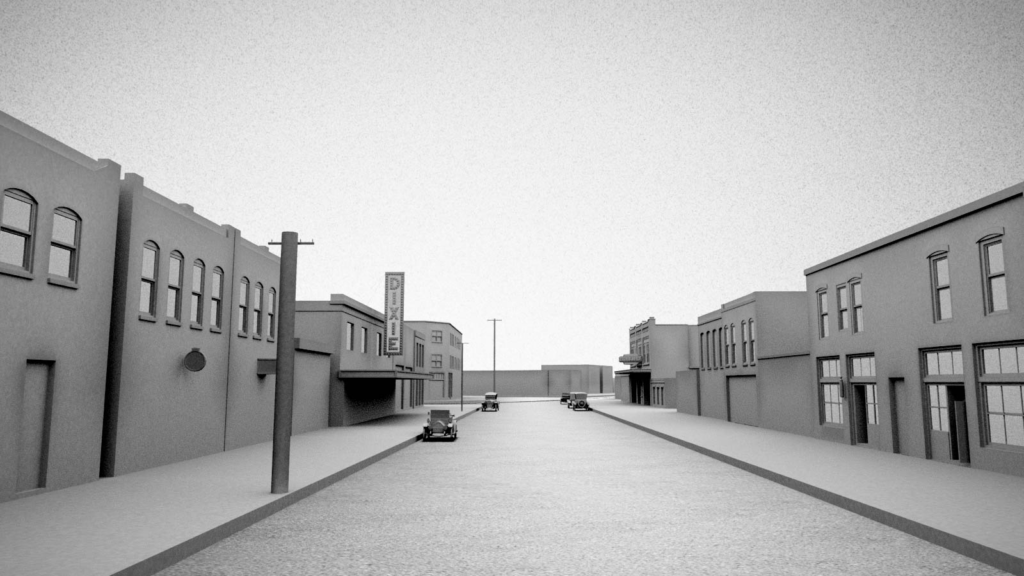
The New York Times created an interactive model of what the Greenwood district looked like before it was looted and burned. This model gives very detailed descriptions about the businesses and centers in the community that made it so lively and prosperous.
The Smithsonian
https://www.smithsonianmag.com/history/black-wall-streets-second-destruction-180977871/
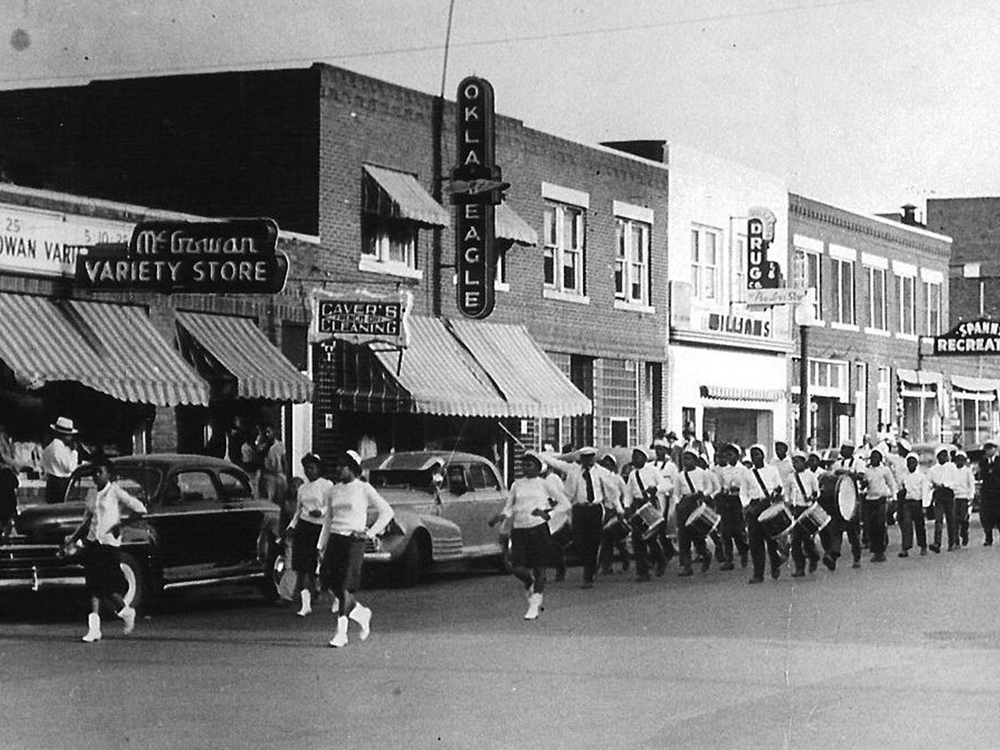
A few short years after the 1921 Tulsa Race Massacre, Greenwood’s homes and businesses came back. This photograph shows a parade held in the Oklahoma neighborhood during the 1930s or ’40s.
NBC News
https://www.nbcnews.com/news/us-news/tulsa-s-greenwood-neighborhood-found-prosperity-after-1921-massacre-then-n1268455
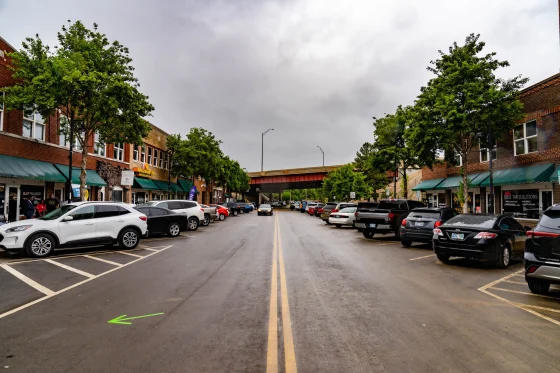
This photo in Tulsa, Oklahoma shows a modern day representation of what is left of Greenwood District. It appears to be taken in the same spot as in the photo with the parade.
Questions
- How do you feel looking at the photo of Black Tulsans celebrating after they rebuilt the Greenwood District?
- When you compare these two photos, how has Greenwood District changed? What was there before and what is there now?
- What do these pictures tell you about the differences between society in the 1940s and society today?
- Even though the Greenwood District was mostly rebuilt after its destruction, it seems to have disappeared again over the years. The district is a lot smaller in size, there are fewer Black residents, and there is not a very rich presentation of its prosperous businesses. Why do you think this once prosperous, resilient district has so little to show for it today? Think about what we have learned and what you know about industrialization, modernization, and discrimination.
- Look at the interactive website created by The New York Times, and take some time to reflect on the differences and similarities between the model and these photos. The model shows more than 35 blocks of the district, but the modern day photo only shows one block of the district. How do you think residents of the Greenwood District have maintained their community even though it has been significantly reduced?
Relevant Literature
Tulsa Girl by Shameen Ebony Anthanio-Williams, Illustrated by Sergio Drumond
Amazon Kindle Direct Publishing
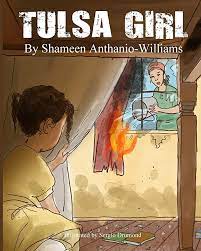
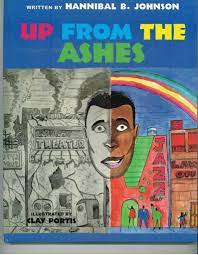
Up From the Ashes by Hannibal Johnson, Illustrated by Clay Portis
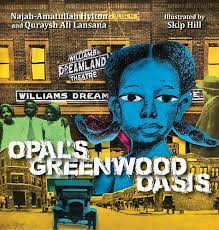
Opal’s Greenwood Oasis by Quraysh Ali Lansana and Najah-Amatullah Hylton, Illustrated by Skip Hill