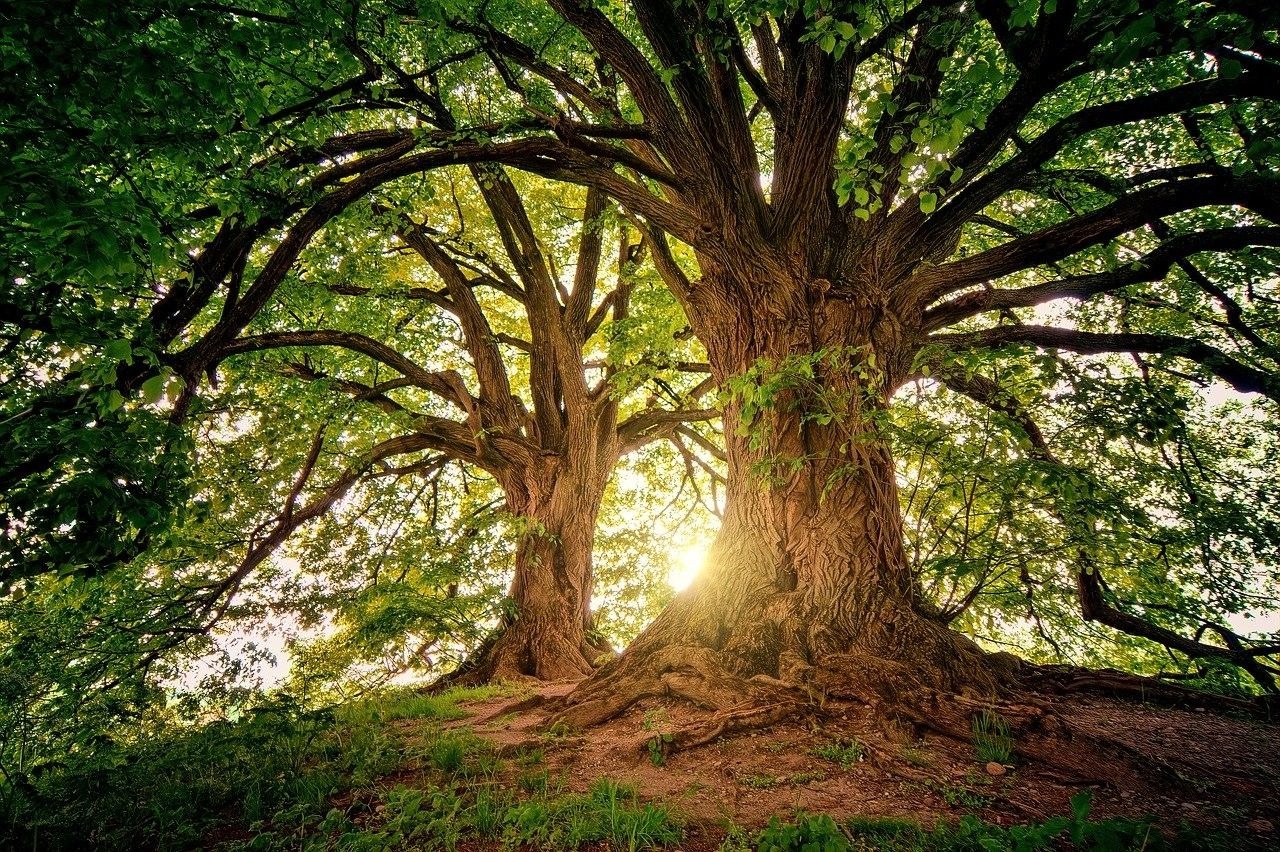
Inspiring ‘Keepers of the Earth’
This title is inspired by author’s Caduto, Bruchac, J., Ka-Hon-Hes, & Wood, C. (1997).
>>Created by: Ellie Courtemanche for grades K-6th<<
Table of Contents
- Children in Action
- EarthRise
- The First Earth Day
- Mother’s in Somalia
- Mária Telkes and the Dover Sun House
- Cuyahoga River Fire
- Saule Suleimenova Plastic Art
- An Alaska Ignition for Change
- Cuban Water Crisis
- The Knox Student Newspaper April 24th, 1970
- Meskwaki Food Sovereignty Initiative
- Teaching Through Literacy Resources
Introductory Project Narrative
The child’s environment is rapidly changing. As educators we have an intense responsibility to elicit understanding of themselves in relation to the natural world around them. Often in public conversation climate change can be frightening, guilt-ridden, and overwhelming. My project is rooted in providing students with primary sources that challenge, question, and empower their ideologies surrounding the sustainability of our planet. I aim to center the child in an active role and exemplify the need for a range of age level accountability; environmental justice is not the sole responsibility of the child.
In short, Earth Day and environmental action has not always been the romanticized movement we know today. Numbers of peoples and communities became, and are increasingly, aware of humans’ impact on the natural world far before Earth Day teach-ins and protests took over the media and long after it was simply considered a time of one-day celebration. These primary resources, intended for the use of elementary educators, will amplify grassroots organizations, children, Black and Brown people, women, indigenous peoples, and artists. There is no particular order for the primary resources, instead it is a collection of resources spanning time and geography. I intentionally chose to create the collection this way to represent the complexity and depth of environmental action and impact. I hope that these primary resources will spark curiosity and ignite care; for in order to protect something, we must first see, acknowlege, and empathize with it.
A note for educators: I have focused questions for outlined grade levels, but many or all of the primary resources can be used in any Elementary classroom based upon different adaptations of questions and focus. Most questions outlined are intended to be asked before the context/caption is given.
1. EarthRise [Image]
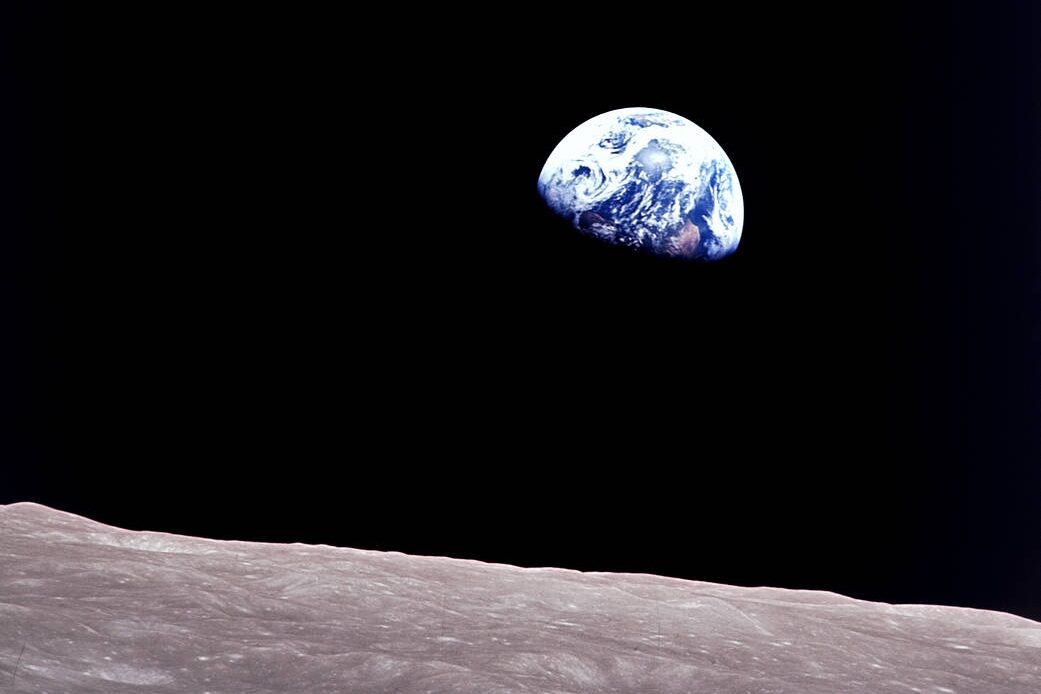
Luabeya, M. (2022, December 23). Apollo 8 astronaut Bill Anders captures Earthrise. NASA. https://www.nasa.gov/image-feature/apollo-8-astronaut-bill-anders-captures-earthrise/
On Dec. 24, 1968, Apollo 8 astronauts Frank Borman, Jim Lovell, and Bill Anders became the first humans to orbit the Moon, and the first to witness the magnificent sight called “Earthrise.” As the spacecraft was in the process of rotating, Anders took this iconic picture showing Earth rising over the Moon’s horizon.
Questions (Grade Level: K-2)
- What are you wondering?
- What are you thinking about when you look at this picture?
- What stands out to you in this image?
2. “The First Earth Day: Looking Back on 1970’s First Earth Day Celebration” [Video]
Public Broadcasting Service. (n.d.). The first earth day. PBS. https://www.pbs.org/wgbh/americanexperience/features/earth-days-first-earth-day/
This video is a collection of different newscast aired and videos taken on the first National Earth Day in 1970. In 1970 this would have been broadcasted and viewed by people on the television during the daily news hours.
Questions (Grade Level 1st-3rd)
- What do you notice about this news story?
- How were people protesting?
- What did you learn about the first Earth Day?
- What did you notice about the people?
3. Children in Action [Gallery of Images]
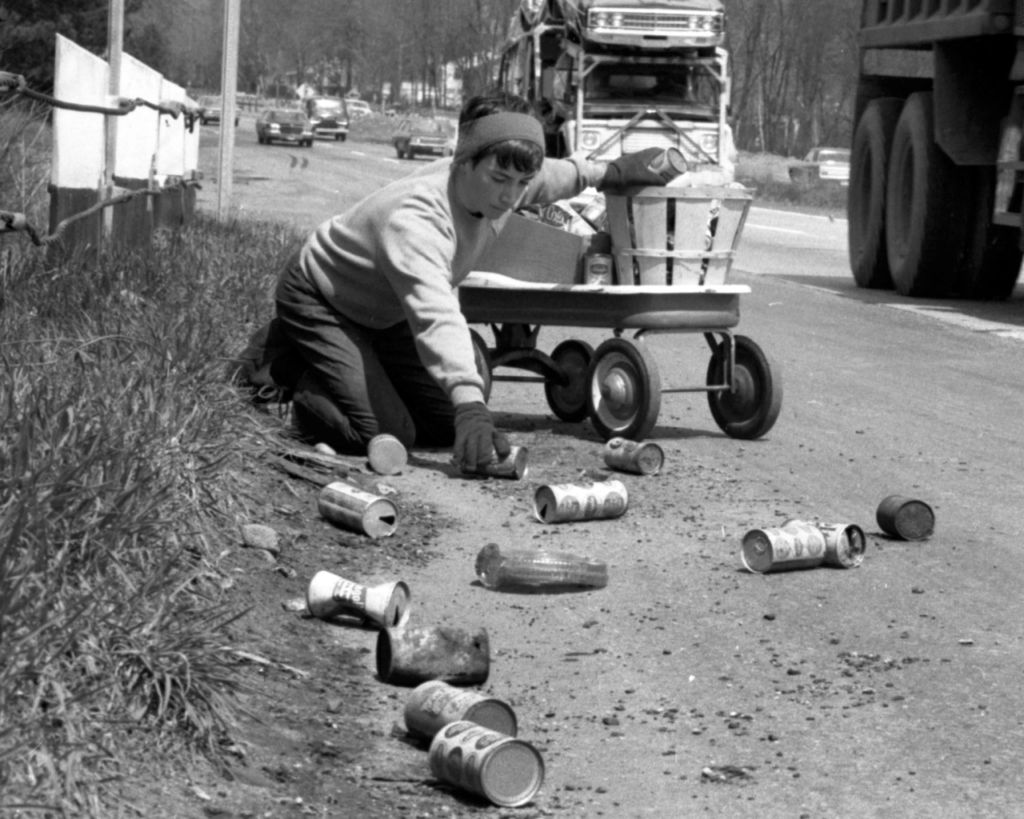
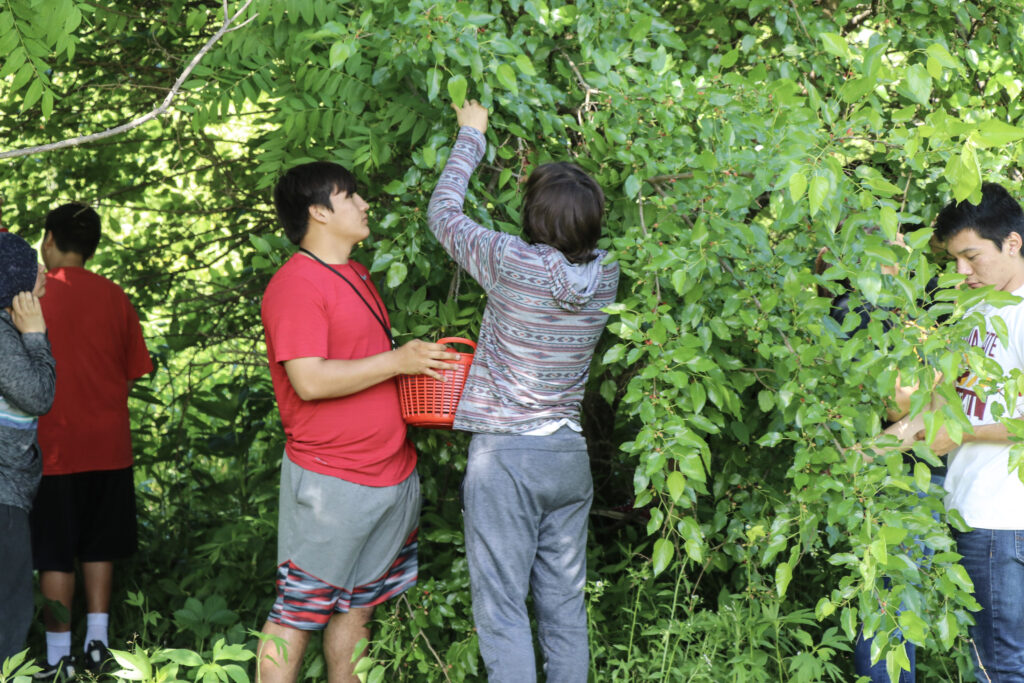
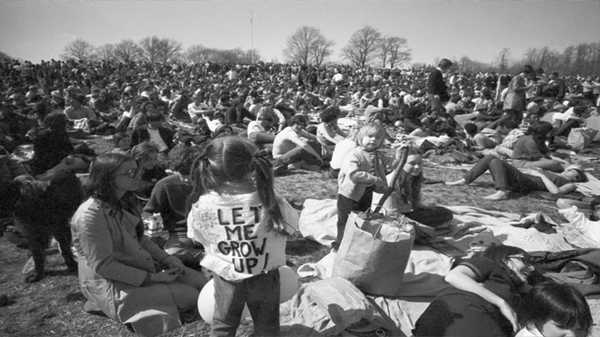
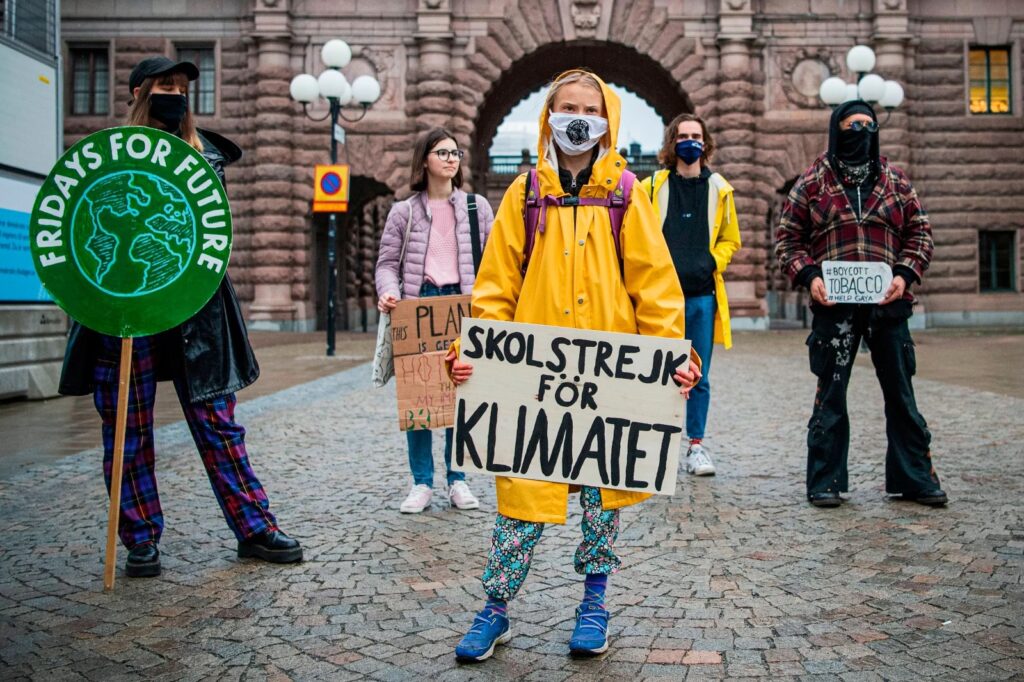
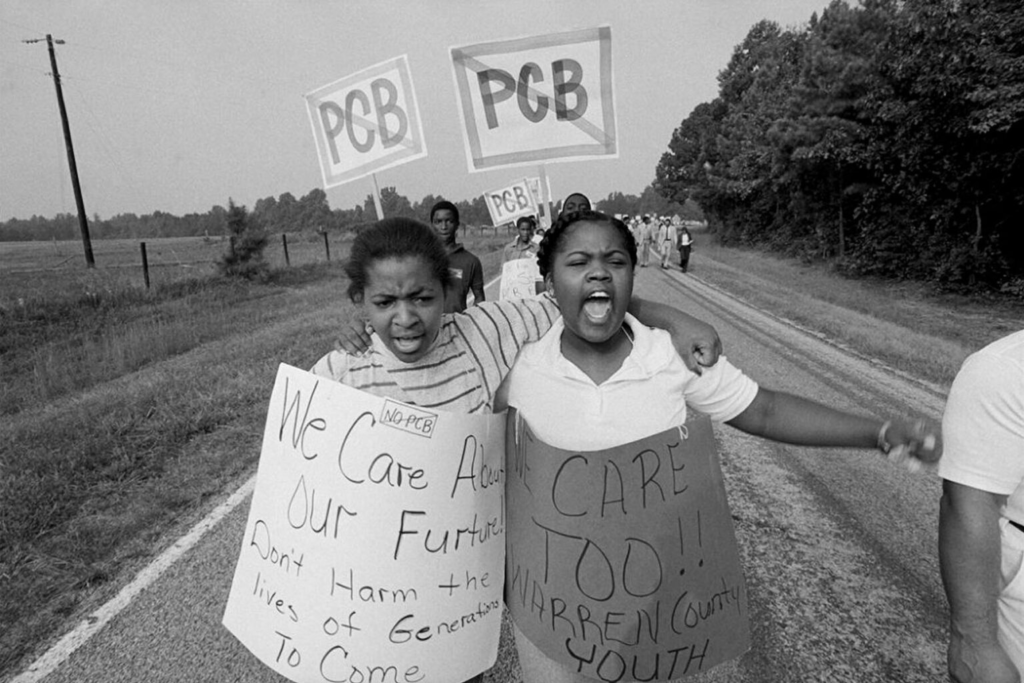
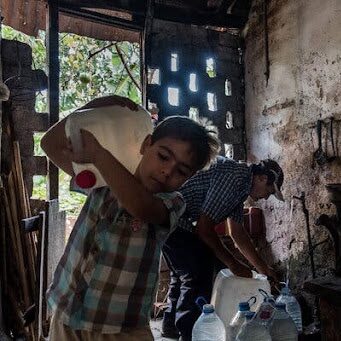
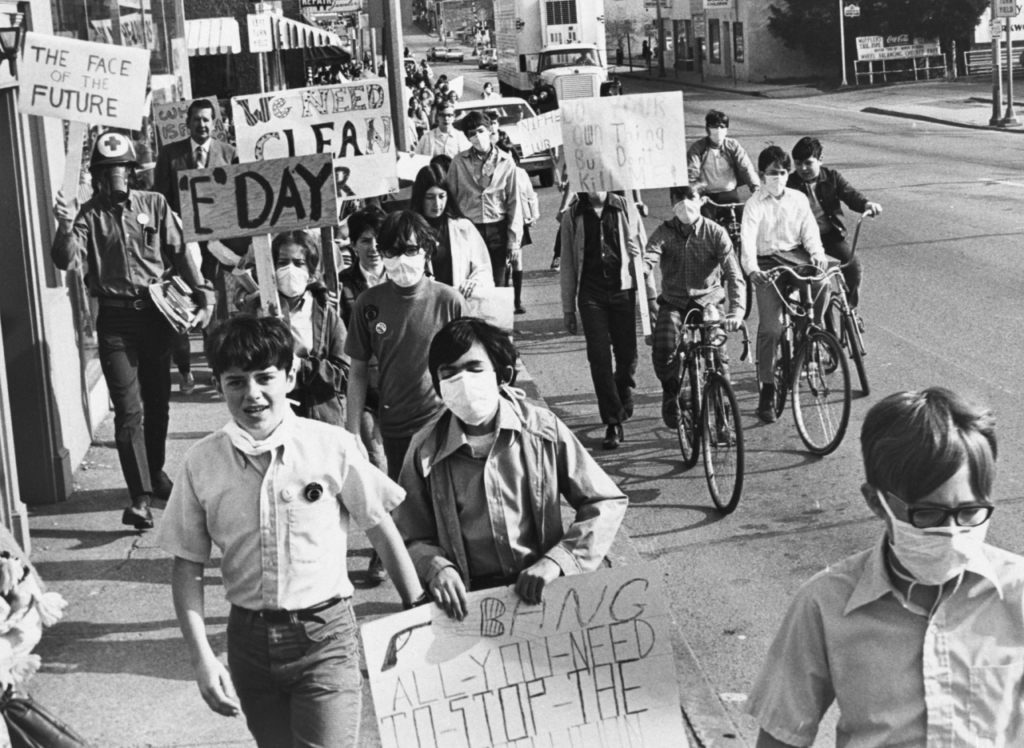
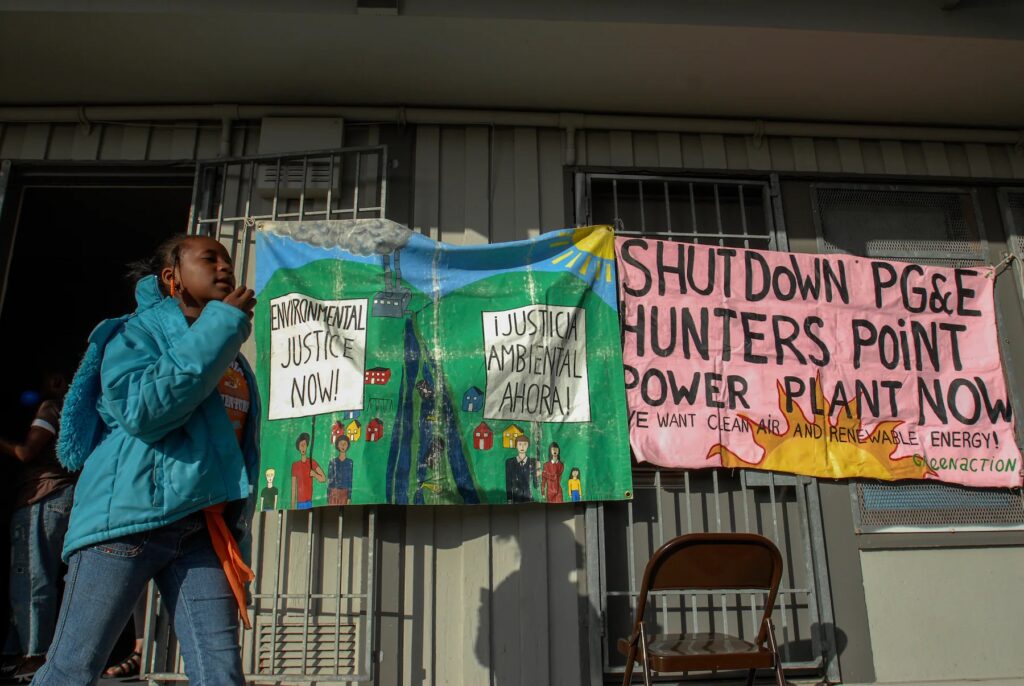
From left to right, top to bottom: Associated Press Earth Week 1970, Meskwaki Food Sovereignty Initiative, Philadelphia Protests, Greta Thunberg, Warren County PCB protests of 1982, Cuban Water Crisis 2021, Associated Press Earth Day 1970, Protests for PG&E Hunters Point Power Plant in San Fransisco, California.
This gallery consists of images of children spanning time, geography, and reason, yet grounded in the same purpose of environmental action.
Questions (Grade Level K-6th)
- What do you notice about the photos?
- What are the people doing in each photo?
- How might people in the photo share a common purpose?
- Where are the people in the photos?
- What do the photos make you wonder about?
- What is important to note about the photos?
4. “Mothers in Somalia Fight Drought, Famine to Feed Children” [Video]
Public Broadcasting Service. (2022, June 12). PBS NewsHour. PBS. https://www.pbs.org/video/somalia-famine-1655063333/
This video tells depicts the hardship of mothers and children in Somalia, Africa as they endure the ravages of climate change. Not only is the region’s drought the worst in decades, but it comes after several consecutive seasons of little rain. Ali Rogin reports on hardest-hit Somalia, where people are fleeing their homes simply to find food and water.
Questions (Grade Level 4th-6th)
- What did you notice in this video?
- Who did you learn about?
- What did you learn?
- How are you thinking about reproductive rights in climate crises?
- What are your questions?
5. Mária Telkes and The Dover Sun House
Public Broadcasting Service. (2023, April 4). American Experience. PBS. https://www.pbs.org/video/dover-sun-house/
For nearly 50 years, chemical engineer and inventor Mária Telkes applied her prodigious intellect to harnessing the power of the sun. She designed and built the world’s first successfully solar-heated modern residence, the Dover Sun House. In 1948, the Nemethy family moved into the Dover Sun House in Dover, Massachusetts. This short video details the Nemethy experience of living there while also explaining the thermal heating system used to heat the home.
Questions (Grade Level 4th-6th)
- What did you notice?
- What did you learn about solar energy?
- What questions do you have?
- What is your understanding or experience of Solar energy in modern time?
6. Cuyahoga River Fire [Image]
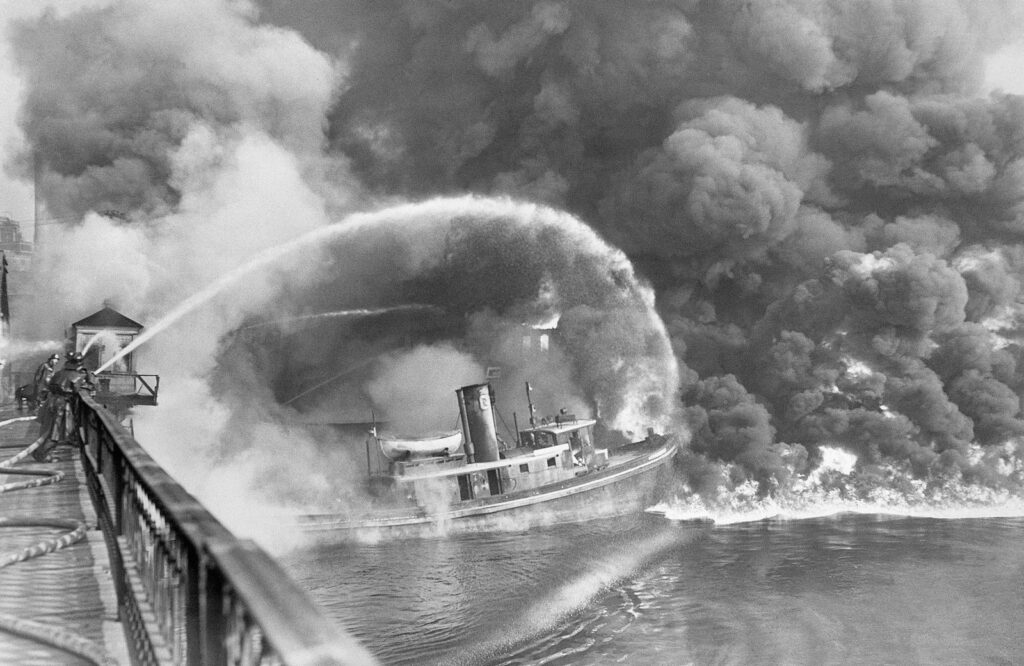
Cuyahoga River Fire, 1952. CONTENTdm. (n.d.). https://cplorg.contentdm.oclc.org/digital/collection/p4014coll18/id/3095/rec/3
Image of the Cuyahoga River on fire November 3rd, 1952. This river, on the land of indigenous Ottawa, Seneca, and Ojibwa people, was once a resource for Indigenous peoples, and provided clean water for many animals. The industrial revolution brought factories and steel mills which polluted the river with oil, sewage, and sludge causing it to catch fire over 12 times over the time period 1868-1969.
Questions (Grade Level K-3rd)
- What do you notice?
- How might someone who lived here make sense of this event?
- How might the river have ended up on fire?
- What are you wondering?
7. Saule Suleimenova Art [Image]
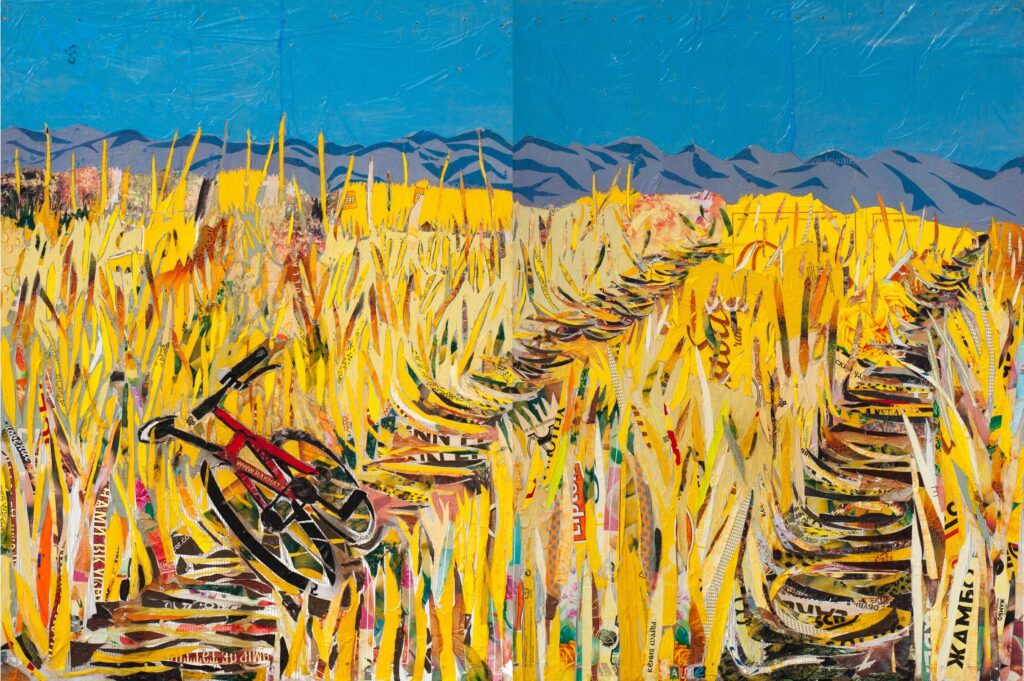
Somewhere in the Great Steppe. saule suleimenova. (2019, September 3). https://saulesuleimenova.com/somewhere-in-the-great-steppe/
Shown is a piece of art work created by Kazakhstan artist Saule Suleimenova. The art is entirely created from plastic bags. Artist description: “SOMEWHERE IN THE GREAT STEPPE is about Kazakhstan – the territory, the people and the archetypes of the nation. The wide territory of steppe is almost all covered by plastic trash. Even when the trash is replaced to the docks the wind throws it across the steppe and often the trash is never picked up”
Questions (Grade Level 1st-4th)
- What do you notice?
- How might you interpret this?
- How do you think this art came to be?
- What are you thinking about after learning this piece is entirely made of plastic?
8. An Alaska Ignition for Change [Image with words]

Lankard, D. (n.d.). Native Conservancy: About Us. Native Conservancy.
This quote is by Dune Lankard, the president and founder of the Native Conservancy (2003). His quote refers to the 1989 Exxon Valdez oil spill in the Prince William Sound that ignited people to environmental crises directly affecting indigenous peoples. This event led to negotiations between Alaskan Indigenous peoples and lawmakers that led to the largest protected subsurface conservation easements in the United States.
Questions (Grade Level 3rd-6th)
- Who do you think said this?
- How might this person’s words be conveying a message?
- What can words tell us that images and videos cannot?
- After given context: What is the importance of organizations like the Native Conservancy?
- If you were to create an organization surrounding conservation, what would you fight for?
9. Cuban Water Crisis [Images]
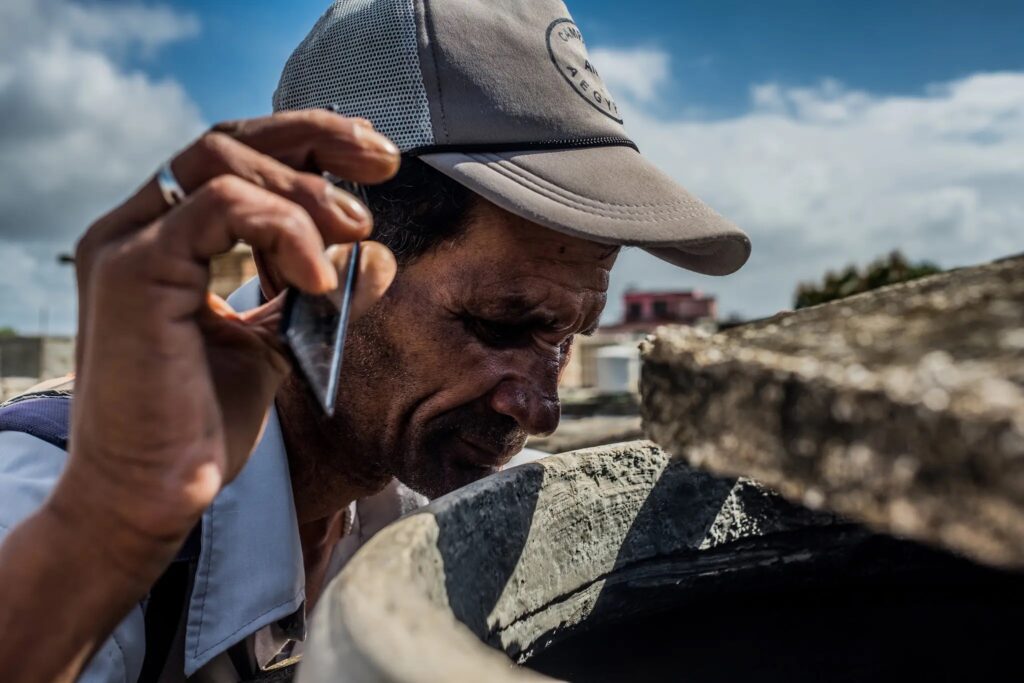
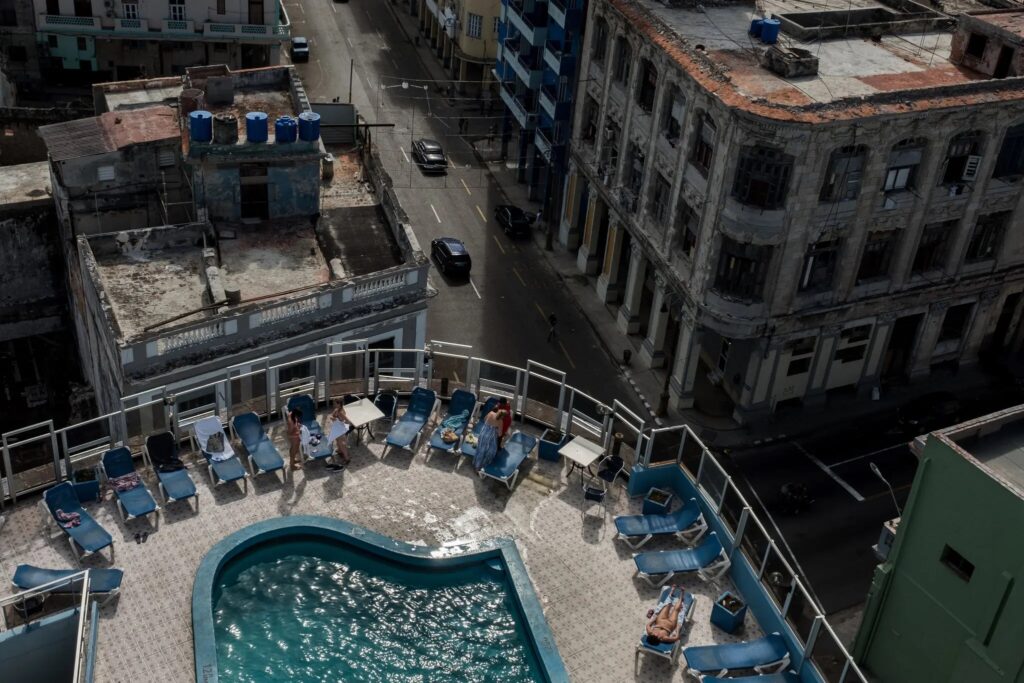
Derks, S. (2021, February 15). An inside look at Cuba’s constant struggle for Clean Water. The New York Times. https://www.nytimes.com/2021/02/15/travel/cuba-clean-water.html?action=click&module=Editors+Picks&pgtype=Homepage
“In recent years, infrastructure problems have been compounded by droughts and rising temperatures in Cuba. For much of the population, running water is available only occasionally — in some cases, for one or two hours a day, every few days. While it flows, residents store the available water in cisterns or tanks, which then serve as potential breeding environments for mosquitoes. ” Pictured on the left is Manuel Reyes Estrada, using a small mirror to illuminate a tanks dark interior. He is checking on the natural alternative to chemical treatment of the water, fish. The fish eat harmful larvae in the water.
Questions (Grade Level 3rd-6th)
- What do you notice about the images?
- What might be the purpose of the photograph?
- What do you think is happening in the photograph on the left?
- What questions do you have?
10. Student Newspaper, April 24th 1970 [Image]
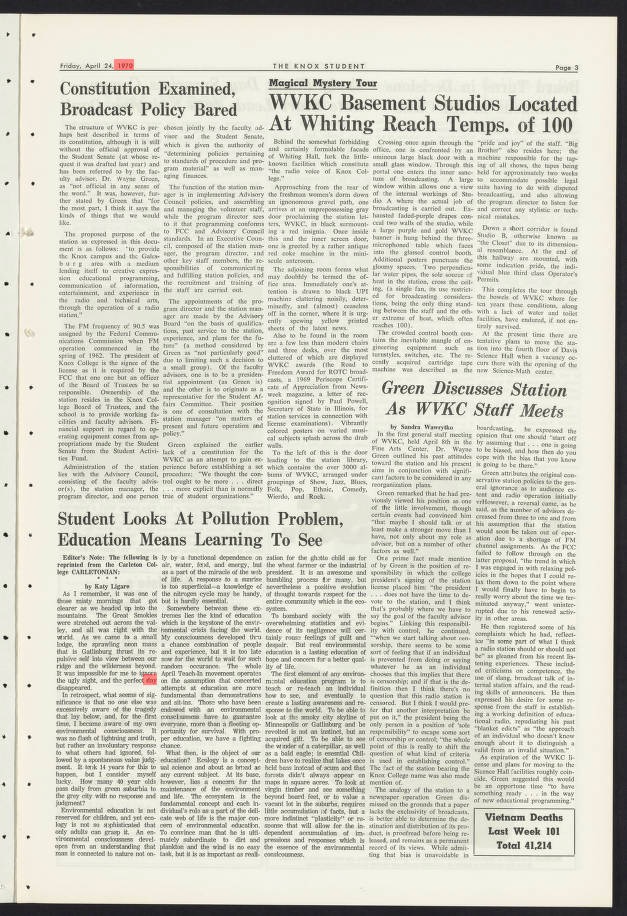
The Knox Student Newspaper, April 24th 1970.
Printed in 1970 just 2 days after the first national earth day, this newspaper, published by Knox College students, features a segment written by Carleton College student, Katy Ligare. In their piece, they reflect on the international environmental crisis with a specific focus on the educational needs of people facing environmental crises. Below is a transcribed section of their writing.
“My consciousness developed thru a chance combination of people and experience, but it is too late now for the world to wait for such a random occurrence. The whole April Teach-In movement operates on the assumption that concerted attempts at education are more fundamental than demonstrations and sit-ins. Those who have been endowed with an environmental consciousness have to guarantee everyone, more than a fleeting opportunity for survival. With proper education, we have a fighting chance.
What then, is the object of our education? Ecology is a conceptual science and about as broad as any current subject. At its base, however, lies a concern for the maintenance of the environment and life. The ecosystem is the fundamental concept and each individual’s role as a part of the delicate web of life is the major concern of environmental education.
To convince man that he is ultimately subordinate to dirt and plankton and the wind is no easy task, but it is as important as the realization for the child, as it is for the wheat farmer or industrial president. It is an awesome and humbling process for money, but nevertheless a positive evolution of thought towards respect for the entire community which is the ecosystem.
To bombard society with overwhelming statistics and evidence of its negligence will certainly arouse feelings of guilt and despair. But real environmental education is a lasting education of hope and concern for better quality of life.”
Questions (3rd-6th)
- What stood out to you in this passage?
- What do you think the author is trying to convey?
- What is important to note?
- What questions do you have?
11. Meskwaki Food Sovereignty Initiative [Image]
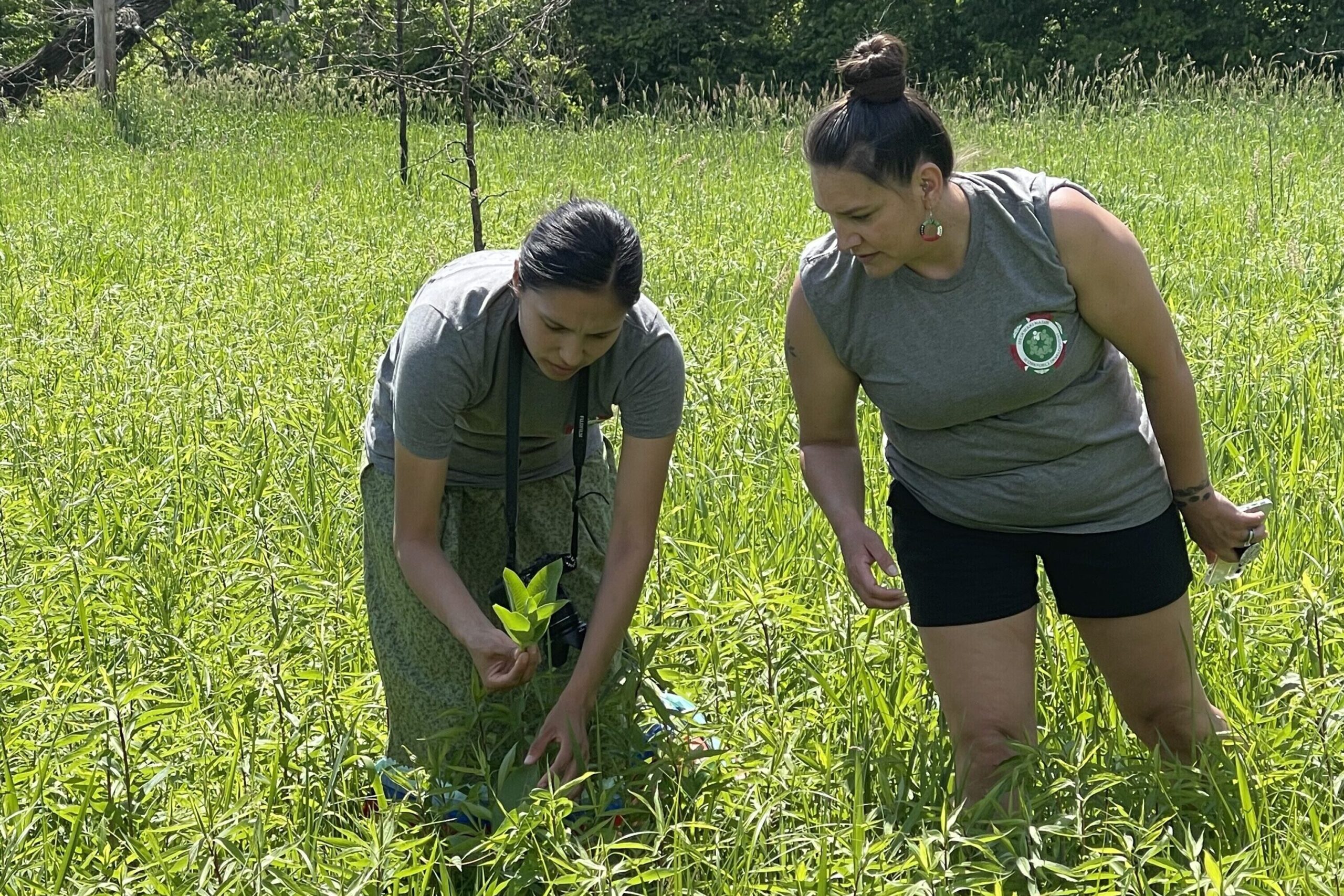
Meskwaki food sovereignty - meskwaki media. Meskwaki Media Meskwaki Food Sovereignty Gallery RSS. (n.d.). https://meskwakimedia.smugmug.com/2021-Photos/Meskwaki-Food-Sovereignty/
The Meskwaki Food Sovereignty Initiative’s mission is to “secure food sovereignty by seeding, growing, and harvesting Meskwaki Indigenous knowledge and life-ways”. The group’s work promotes local and indigenous foods and medicines and promotes the health and wellbeing of the Meskwaki community through a farm-to-school program, a maple syrup camp, a seed-saving library, a food film festival and much more. Learn more at: https://www.meskwaki.org/mfsi/
Questions (K-6th)
- What do you notice?
- What do you think the two individuals are doing?
- What question’s might you ask them if you where there?
