Created by: Shelby Dolson
For Grades: 5th +
Table of Contents
- Introductory Paragraph
- Nettie Stevens: Sex Chromosomes 1861-1912
- Elizabeth Magie Phillips: Monopoly 1866-1948
- Josephine Baker: Entertainer and Activist 1906-1975
- Chien-Shiung Wu: Manhattan Project 1912-1997
- Hedy Lamarr: “The Mother of Wifi” 1914-2000
- Rosalind Franklin: DNA Double Helix 1920-1958
- Relevant Children’s Literature
1. Introduction
At every grade level, students are taught about men in history, STEM, and other fields making progress and getting the recognition they deserve. The traditional schooling curriculum, especially in history, has a male-focused gaze, seldom focusing on the accomplishments of women in history. Women were and are present and active members of society in all aspects. A common understanding is women do not become doctors because they settle for nursing, or its equivalent in other fields. We tend to ignore the reasons behind the lack of women in well known and successful fields. Women weren’t permitted to attend college, vote, or equally participate in society as men, and yet, they still contributed to every aspect of historical successes. And the women who were able to excel in their fields go unnamed, uncredited, or underrepresented for their work.
This Journey Box is intended to offer a counter narrative to how we understand the historical accomplishments and contributions of women in what we typically understand as male-dominated fields. Many of the topics included in this are about women working alongside men, but not having the same recognition. There are situations where women receive no credit because a man claimed fame first. But oftentimes men’s accomplishments are the focus and receive more recognition and are primary topics in traditional educational resources regardless of the roles of the women involved. The Journey Box includes primary sources from six women who all had significant contributions in different fields but had their roles erased or minimized.
My intent for this Journey Box was to show the accomplishments of women in fields and topics typically covered or addressed in educational systems. I also wanted to highlight the importance of researching and doing more background exploration in order to acknowledge the contributions of people who didn’t receive credit or are lesser known.
Many of the topics/sciences covered are explored in upper elementary and middle school, but the “Landlord’s Game” example and the relevant children’s literature introduce the importance of women’s accomplishments for young learners.
2. Nettie Stevens: Sex Chromosomes 1861-1912
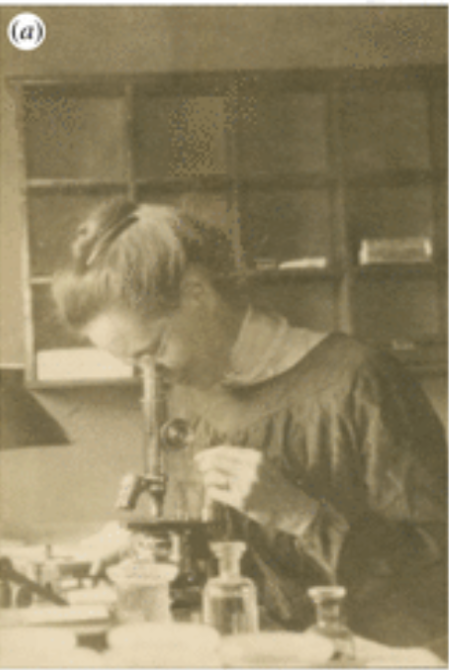
The Royal Society Publishing https://royalsocietypublishing.org/doi/10.1098/rstb.2021.0215
Photograph of Dr Nettie Stevens looking through her iconic microscope (1909).
Nettie Stevens researched mealworms and discovered that the male sex cell had either an X or Y chromosome, while the female sex cell has only an X chromosome. An XX pairing would create a female and an XY pairing would create a male. She made her discovery in 1906, but her work was not widely accepted or endorsed because a male researcher named Edmund Wilson made a similar discovery and published similar results around the same time as Stevens.
Questions
- What do you notice about this photo?
- Look at the background of the photo. What else can you see with Dr Stevens? Does anything look familiar?
- What do you think she’s looking at? Where do you think she’s working?
3. Elizabeth Magie Phillips: “Landlord’s Game” 1866-1948
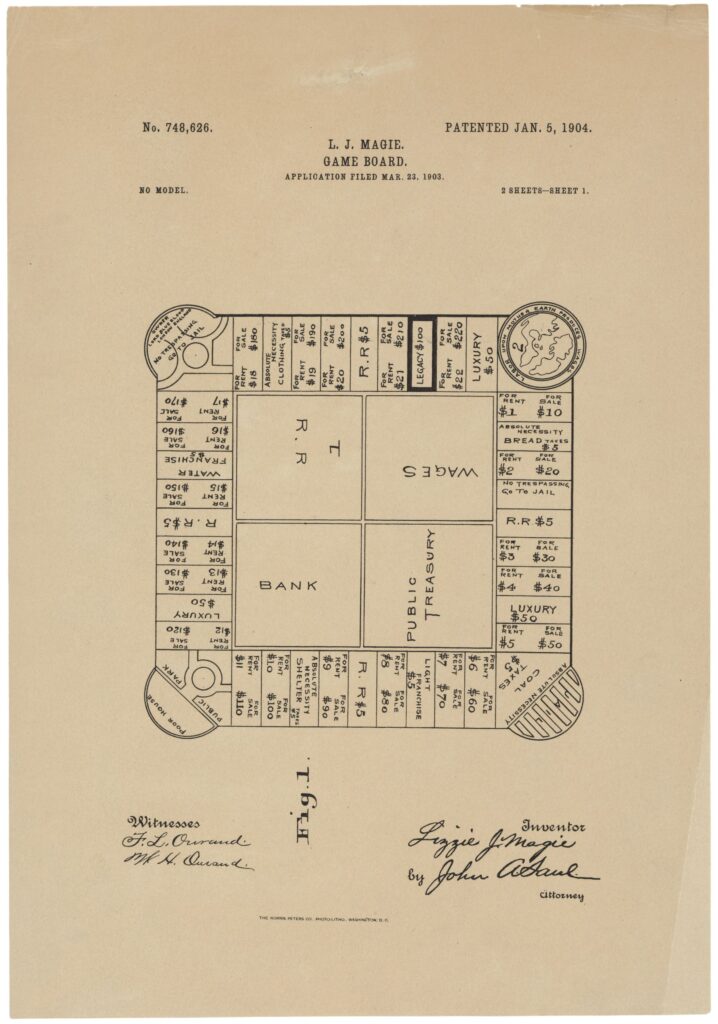
Docs teach National Archives https://docsteach.org/documents/document/drawing-game-board
Elizabeth’s original design for “Landlord’s Game.”
Elizabeth Magie submitted this drawing of this game-board called the Landlord’s Game in 1904 to secure a legal claim. The object of the game was to collect as much wealth as possible. The original game did not hold the level of popularity that it has now. Charles Darrow took the claim of the game from the Patent Office, and modified it to look as we know it today. He renamed the game “Monopoly.” Charles Darrow is credited for the invention of the game, and Elizabeth Magie’s role in the invention remains uncredited.
Questions
- What do you notice about the game-board? How is it similar/different to the Monopoly game we know now?
- Look at the locations listed and their costs. How are they different from the modern game and modern expenses?
- Would you play “Landlord’s Game?” What do you think the game money and pieces looked like?
4. Josephine Baker – Entertainer and Activist 1906-1975
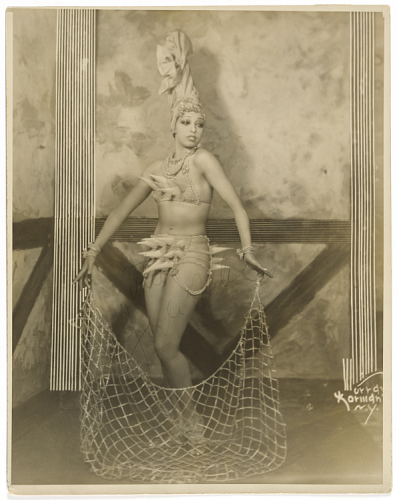
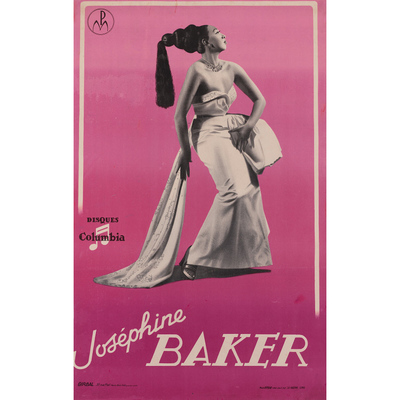
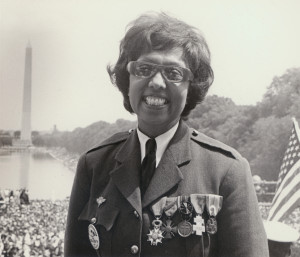
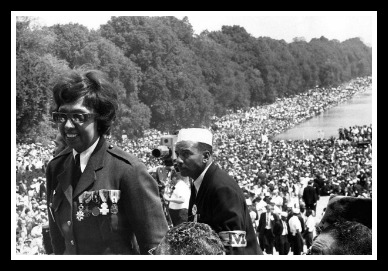
Digital Public Library of America https://dp.la/search?q=Josephine+baker
The History Chicks
Upper images: Josephine Baker pictured in elaborate performance costumes.
Lower Images: Josephine, wearing her French Resistance uniform and her medals from her service in WW2 at the March on Washington.
Josephine Baker was an entertainer and activist. She was the first African American woman to star in a motion picture, perform with an integrated cast in an American concert hall, and one of the first African American entertainers who achieved acclaim in both movies and on stage. She performed vaudeville showcases and in Broadway musicals. As an activist, Baker was the only woman speaker at the March on Washington in 1968 where she honored fellow women civil rights activists. She was also known to have relationships with both women and men.
Questions
- What do you notice about the upper two pictures of Josephine Baker in performance costumes? How is she dressed? What is highlighted or emphasized by the costumes?
- How do the four pictures compare to one another?
- How do the pictures of Josephine Baker at the March on Washington compare to other photos you might have seen of the march? How do the photos make you feel?
5. Chien-Shiung Wu Ph.D – the Manhattan Project 1912-1997
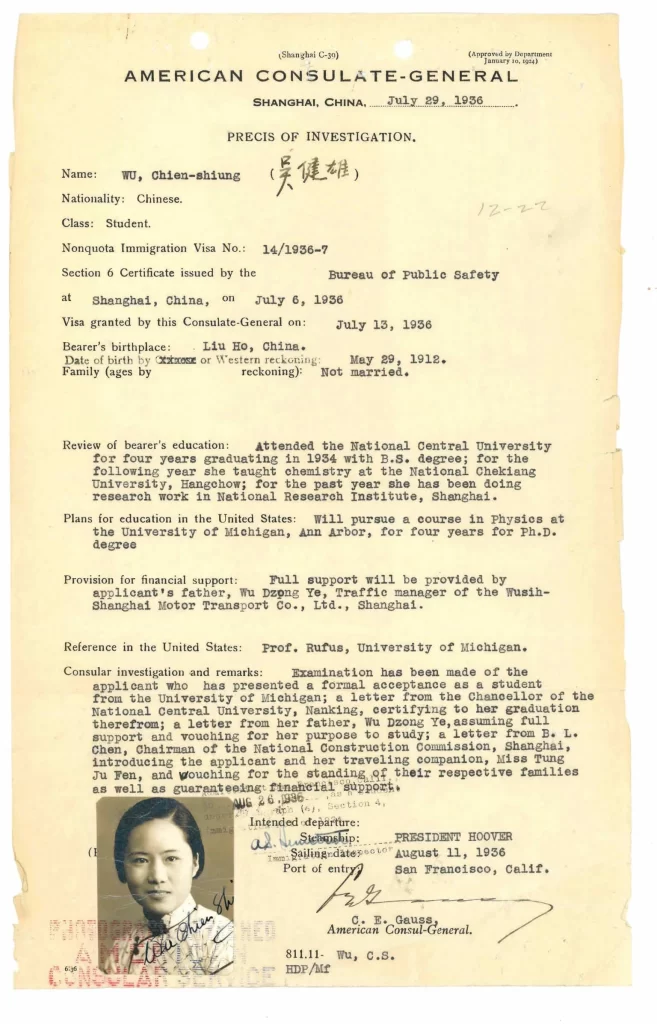
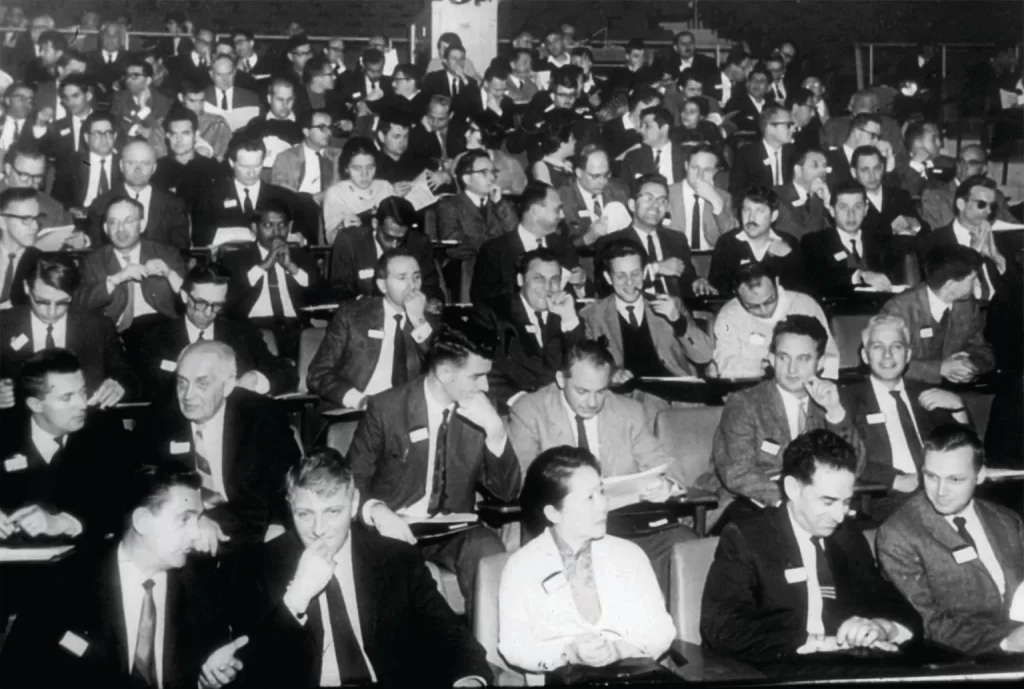
Scientific American https://www.scientificamerican.com/article/the-little-known-origin-story-behind-the-2022-nobel-prize-in-physics/
Upper Image: Wu’s Immigration File from 1936
Lower Image: Chien-Shiung Wu at a physics conference in Israel in 1967 pictured in the front row in white.
Chien-Shiung Wu persevered through sexism, lack of representation, and racism brought on by WWII while working on her Ph.D. She was the first woman hired to the Princeton University physics faculty and was later recruited by the Manhattan project for research that would later produce the first nuclear weapons during WWII. Wu also navigated repeated investigations by immigrant authorities and threats of deportation for years. Wu was well respected for her research, but did not receive the credit she deserved, while her male colleagues did. Her two male colleagues, Yang and Lee, became the first two Chinese Americans to win a Nobel Prize. Although the Nobel rules allow for up to three recipients, Wu was not included. Other scientists criticized Wu’s exclusion from the highest recognition of scientific achievement, and several wrote letters to the Nobel Committee recommending Wu for the physics prize. Although she was never awarded a Nobel Prize, she was honored with other significant achievements and titles. Wu became the first woman to receive the Comstock Prize from the National Academy of Sciences; the first female president of the American Physical Society; the first physicist to receive the Wolf Prize; and the first living physicist to have an asteroid named in her honor.
Questions
- What information is included in Wu’s immigration paperwork?
- Look at the picture of the physics conference. What do you notice about the location and the individuals present?
- Does the conference photo remind you of anything? How does it make you feel? What ideas do you have about the photo?
6. Hedy Lamarr – “The Mother of Wifi” 1914-2000
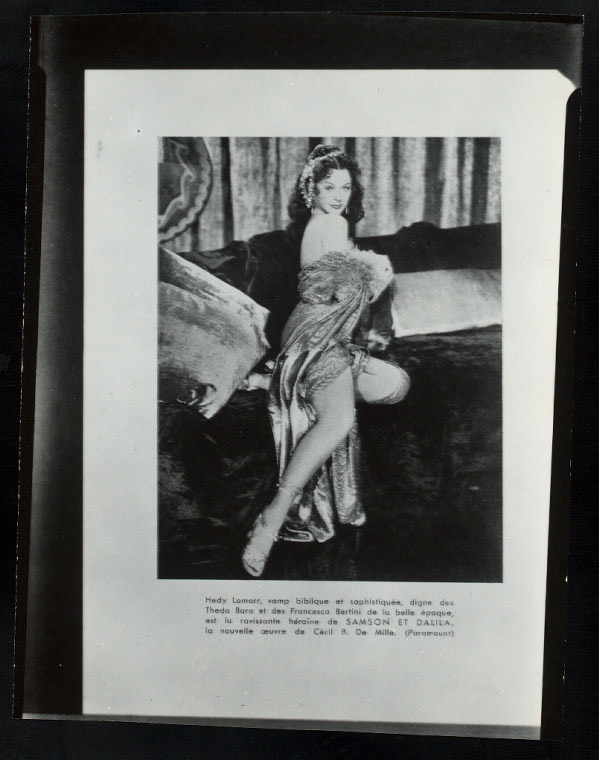
Digital Collections https://digitalcollections.nypl.org/items/5469e8a0-ff7a-012f-7859-58d385a7bc34#/?uuid=510d47df-0ec9-a3d9-e040-e00a18064a99
Upper Image: Photograph of Hedy Lamarr
Video: Informational video on Hedy Lamarr and an audio recorded interview.
Hedy Lamarr dropped out of school at an early age to pursue acting. She was also incredibly attractive and is modernly regarded as the Angelina Jolie of her time and is thought to be the inspiration for Snow White and Cat Woman. A lesser known aspect of her life was her passion and skills in STEM. She was a brilliant inventor, working on the modern shape of the airplane with Howard Hughs and other governmentally significant projects during WWII. Lamarr had a patent for a frequency-hopping technology that is now used in Bluetooth and Wifi as well as other forms of communication. However, due to her immigrant status, she was never compensated for her invention which would amount to about $30 billion dollars today.
Questions
- What do you notice about the photo? What is she wearing and why? Where do you think she is?
- Based on the photo, what do you think Hedy does for work?
- In the interview, Hedy says, “The brains of people are more interesting than the looks, I think” What might Hedy mean by this?
7. Rosalind Franklin: DNA Double Helix 1920-1958
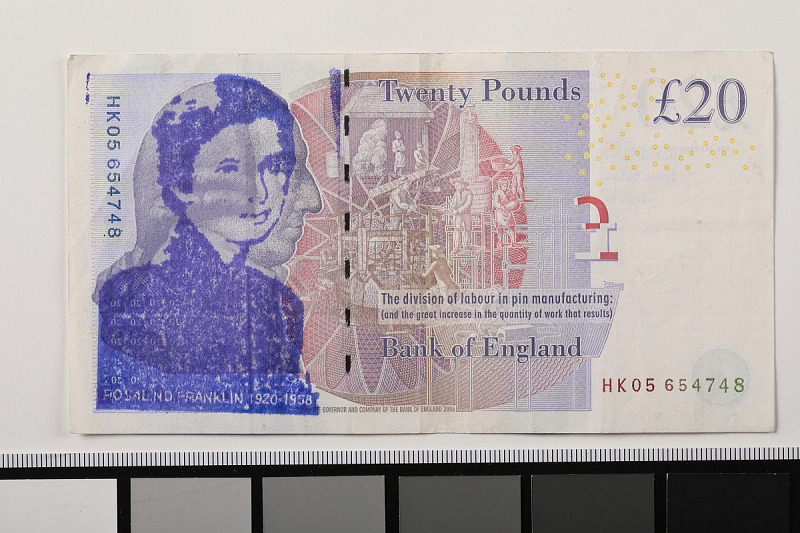
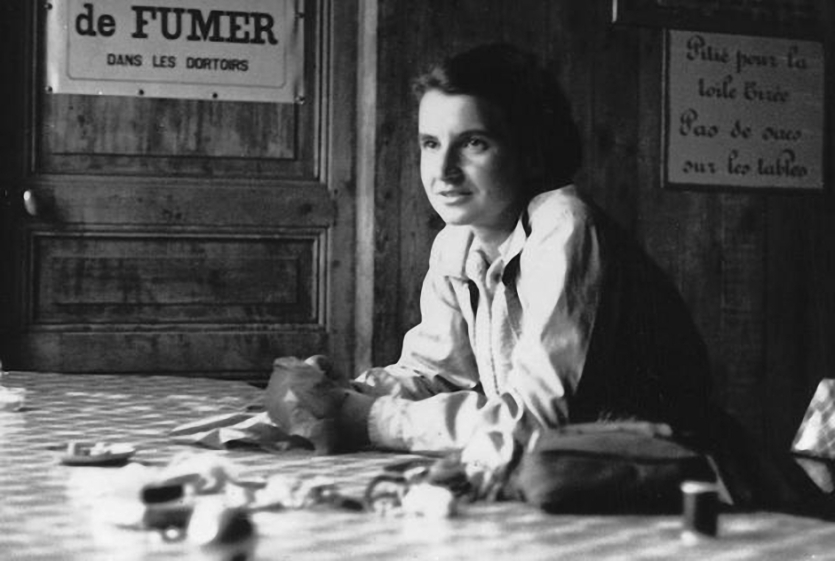
Smithsonian National Museum of American History https://www.si.edu/object/rosalind-franklin:nmah_1872846
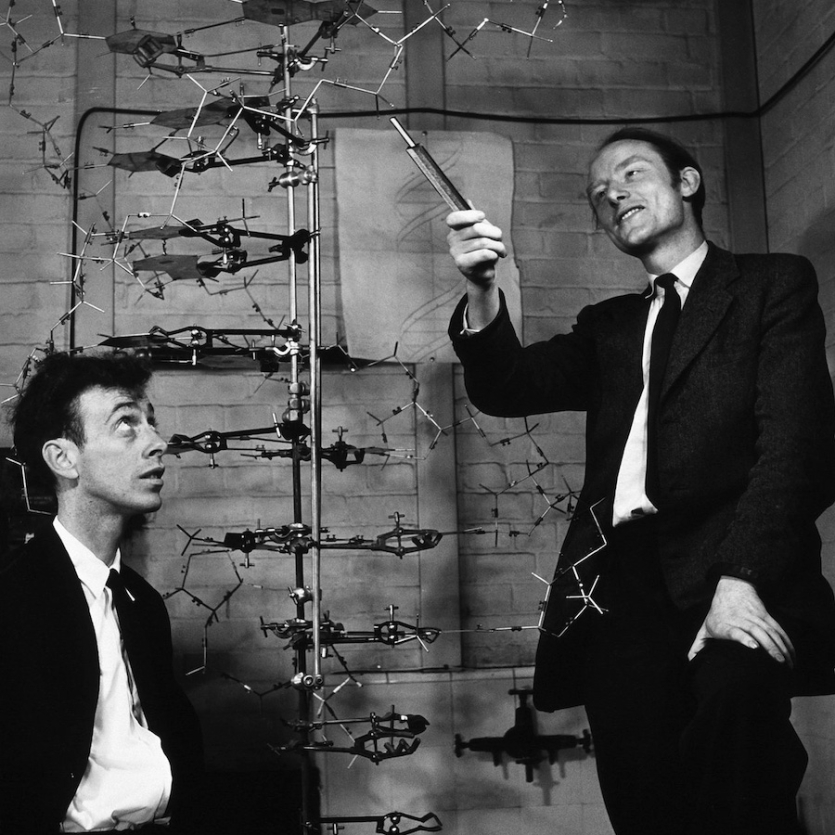
Science History Institute https://www.sciencehistory.org/historical-profile/james-watson-francis-crick-maurice-wilkins-and-rosalind-franklin
From top to bottom: 20 pound bill with the picture of Dr. Rosalind Franklin, James Watson and Francis Crick with their DNA model at the Cavendish Laboratories in 1953, and Rosalind Franklin in Paris in 1949.
Four people were in a research group studying the structure of DNA. They were James Watson, Francis Crick, Maurice Wilkins, and Rosalind Franklin.
James Watson and Francis Crick are well known and credited in the field of science for their discovery of the structure/double helix of DNA. James Watson, Francis Crick and Maurice Wilkins won the Nobel Prize in Physiology or Medicine in 1962 for their discovery, however one member of their team went uncredited.
Rosalind Franklin was not given the same honor for two reasons: The Nobel Prize can only be awarded to a max group of three, she died four years earlier, and Nobles aren’t awarded posthumously. Instead, her image was put on the 20 pound bill, which is only given to nominees who have contributed to the field of science and have passed away. In most classroom resources, only Watson and Crick (sometimes Wilkins) are mentioned/accredited for the discovery.
Questions
- What do you notice about the photos of Dr. Rosalind Franklin, James Watson and Francis Crick?
- What is in the backgrounds of the photos? How are they dressed?
- Look at the 20 pound bill honoring Rosalind Franklin. What does the bill have on it? How does it honor Dr Franklin?
8. Relevant Children’s Literature
- Women in Science: 50 fearless Pioneers Who Changed the World, Rachel Ignotofsky, Clarkson Potter/Ten Speed.
- Girls think of Everything: Stories of Ingenious Inventions by Women, Catherine Thimmesh & Melissa Sweet, Houghton Mifflin Company Boston.
- Dinosaur Lady, Linda Skeers & Marta Alvarez Miguens, Sourcebooks Explore.
- Hidden Figures, Margot Lee Shetterly with Winifred Conkling & Laura Freeman, HarperCollinsPublishers.
